
Are you being kept awake by mysterious scratching, thumping, or scurrying noises in your attic? If so, you’re not alone. Spring 2026 is seeing a major spike in Connecticut wildlife activity as female raccoons and squirrels seek safe nesting sites for their litters.
Whether it’s the heavy ‘walking’ sounds of a raccoon or the 2 AM social ‘chirping’ of a flying squirrel colony, these noises are more than just a nuisance—they can indicate chewed wires, soiled insulation, and structural damage. As a veteran-owned, NWCOA-certified specialist, RF Wildlife provides discreet, humane removal using unmarked trucks to solve your attic wildlife problems without the neighbor drama. Serving Old Saybrook, Madison, Waterford, and across Middlesex and New London Counties, we’re available 24/7 to identify what’s in your attic and seal it out for good.
First Things First: The “Bang Test” to Identify Attic Intruders
Before we dive into the potential culprits, there is a simple, non-invasive way to help determine which Connecticut animal is claiming your attic: The Bang Test.
Simply bang firmly on the ceiling or walls near the noise and listen closely for the reaction. Here is what to expect from common CT wildlife:
- Squirrels: will run around and make a lot of noise.
- Mice: Often freeze in place immediately. You’ll hear a sudden silence—the “I’m not dead yet” wait time—as they wait for the threat to pass before they resume scurrying.
- Bats: Usually won’t respond to the banging at all. Bats rely on echolocation rather than sensitive hearing for defense, so a loud thud rarely triggers a flight response.
- Raccoons: Because they can weigh 10–20 lbs, they sound like a heavy human walking in your attic. They may stop briefly, but they rarely retreat; in some cases, an aggressive mother raccoon protecting a litter may even growl or “chuff” back.
- Flying squirrels: These are strictly nocturnal and highly sensitive. When you bang, they will almost always scurry away immediately. Pro-Tip: Take note of the direction they run. Flying squirrels usually head straight for their primary exit, which helps us pinpoint the exact exclusion and sealing points later.
Now that you know what to listen for let’s take a closer look at some of the common culprits that might be making noise in your attic.
Raccoons: The “Heavy Thumpers” of Connecticut Attics
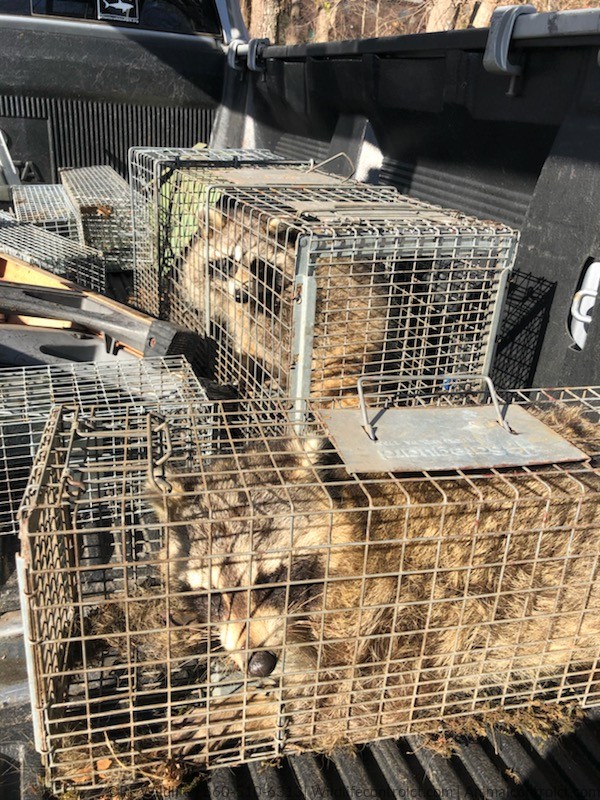
Raccoons are the most destructive attic intruders in the Middlesex and New London County area. Weighing 10–20 lbs, their movement sounds like a human walking or heavy thumping across your ceiling. They are attracted to attics because they offer a warm, predator-free environment for nesting—especially during the Spring “Kit” (baby) season.
The Signs & Risks:
- Noises: Heavy walking, scratching, and vocalizations like chattering or “chuffing.”
- Structural Damage: Raccoons will rip apart soffits, pull up shingles, and tear through heavy-duty attic insulation.
- Fire Hazard: Like squirrels, they frequently chew through electrical wiring once inside.
- Health Hazards: Raccoons often create “latrines” (dedicated waste areas), contaminating your insulation with hazardous droppings.
The RF Wildlife Approach:
Because raccoons are a Rabies Vector Species (RVS) in CT, removal must be handled by a licensed professional. We specialize in humane trapping and permanent exclusion, sealing every entry point so they can’t return. Our unmarked trucks ensure your “raccoon drama” stays private from the neighbors.
Squirrels: Daytime Scramblers vs. Nighttime Gliders
Squirrels are the most frequent attic intruders in towns like Madison, Waterford, and Old Saybrook. In Connecticut, we deal with two distinct types, and knowing which one you have changes the removal strategy.
Gray Squirrels (Daytime Activity)
If you hear rapid scratching, running, or nut-rolling sounds at dawn and dusk, you likely have Gray Squirrels. They enter through tiny gaps in your fascia, soffits, or ridge vents.
- The Risk: They are obsessive chewers. They will gnaw on wooden support beams and electrical wiring, creating a significant fire hazard.
- The Sign: You’ll often see them jumping onto your roof from nearby trees during the day.
Flying Squirrels (Nighttime Activity)
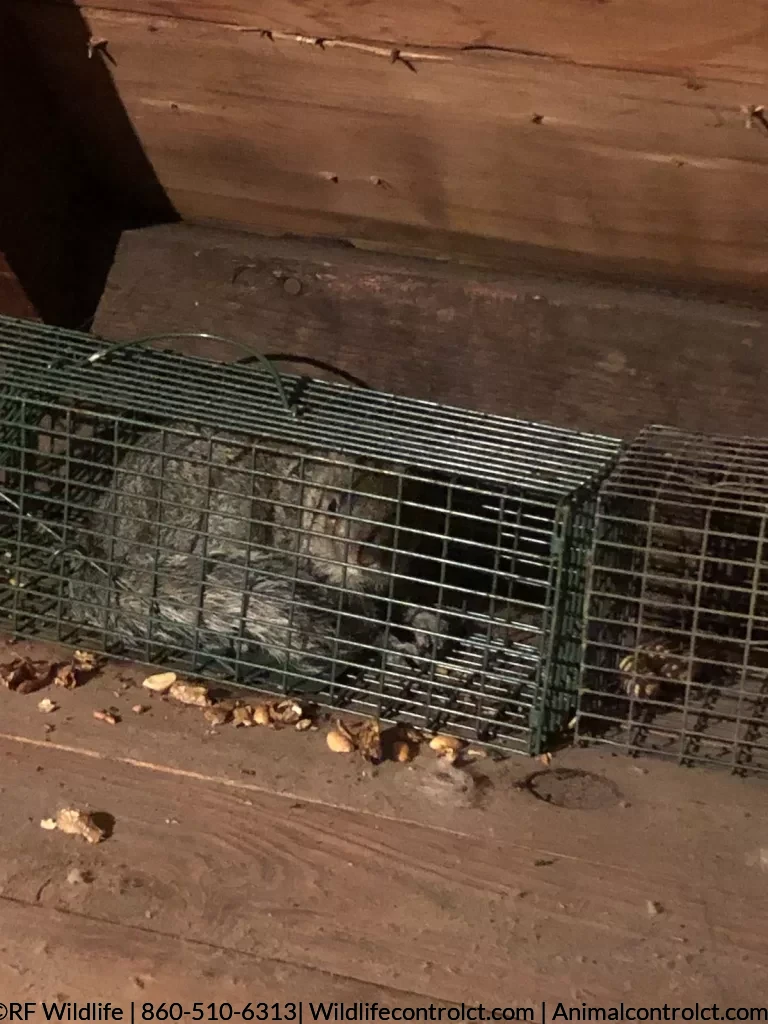
If the noise happens at 2 AM, it’s almost certainly Flying Squirrels. Unlike Gray Squirrels, “Flyers” are strictly nocturnal and highly social—if you hear one, you likely have a colony of 10 to 20.
- The Sound: Soft scurrying, “social chirping,” and thuds from landing after gliding.
- The Risk: Because they live in large groups, they can quickly saturate attic insulation with waste, requiring professional attic restoration and decontamination.
The RF Wildlife Solution:
We don’t just “trap” squirrels. We identify every entry point—some as small as a quarter—and use One-Way Doors and permanent exclusion to get them out and keep them out. Our NWCOA-certified exclusion techniques ensure your home is sealed tight for the long term.
Flying Squirrels: The 2 AM “Social” Intruders
Flying squirrels are strictly nocturnal and are the most common cause of middle-of-the-night scurrying in Middlesex and New London County attics. Unlike their daytime cousins, “Flyers” don’t just move in pairs—they are highly social colony animals. If you hear noise in your attic at 2 AM, you aren’t dealing with one squirrel; you’re likely hosting a colony of 10 to 30 individuals.
The Signs & Sounds:
- The Noise: Fast, light scurrying, “thumping” from landing after a glide, and distinct high-pitched social chirping or squeaking.
- The Entry: They can squeeze through a hole the size of a quarter. They often enter through ridge vents, gable vents, or gaps in the construction “gap” where the roof meets the siding.
- The Risk: Because they live in large groups, they quickly create “latrines” (toilet areas) that saturate your attic insulation with urine and droppings, leading to odors and health risks.
The RF Wildlife “Permanent Fix”:
Trapping flying squirrels is a temporary band-aid. At RF Wildlife, we use a Total Exclusion Strategy. We identify every tiny entry point on your home and install professional-grade one-way doors. This allows the entire colony to exit safely but prevents them from ever getting back in. Our NWCOA-certified exclusion is the only way to solve a flying squirrel problem for good.
Bats: The “Wall Scratchers” of Connecticut
In the Middlesex and New London County area, the Big Brown Bat is the most frequent attic intruder. Unlike squirrels, bats don’t chew; instead, they use existing gaps as small as 3/8 of an inch to enter your home. They are attracted to the heat trapped in your attic, which provides the perfect environment for a maternity colony to raise their young.
The Signs & Sounds:
- The Noise: Light scratching or “fluttering” sounds, often coming from inside wall voids or near the eaves at dusk and dawn. You may also hear faint, high-pitched “ticking” or squeaking as they wake up.
- The Entry: Look for dark, oily “rub marks” or staining around gable vents, trim boards, or chimney flashing.
- The Risk: Bat droppings (guano) accumulate quickly. Over time, this can lead to the growth of Histoplasma capsulatum, a fungus that can cause respiratory issues (Histoplasmosis) in humans.
The RF Wildlife Bat Strategy:
Bats are environmentally protected in Connecticut, and removal is strictly regulated. At RF Wildlife, we are specialists in Humane Bat Exclusion. We install professional-grade “bat valves” or one-way curtains that allow the bats to exit safely at night but prevent them from re-entering. Once the colony is out, we provide full Attic Restoration, including the safe removal of contaminated insulation and the sealing of all secondary gaps.
Mice: The “Rapid Scamperers” of CT Attics
In the Middlesex and New London County areas, the most common attic invaders are White-Footed Mice and Deer Mice. These are highly athletic climbers that can enter through a hole the size of a dime. When the Connecticut ground freezes in late fall, these mice swarm into attics and basements seeking warmth and nesting material.
The Signs & Risks:
- The Noise: Rapid, high-pitched scurrying or “patter” sounds across your ceiling. Unlike squirrels, mice are active in short bursts throughout the night.
- The Health Risk: White-footed mice are the primary reservoir for Lyme Disease (carrying the ticks into your home) and can spread Hantavirus through their droppings and urine.
- The Damage: Mice are obsessive gnawers. They will chew through electrical wire insulation, plastic PVC pipes, and expensive attic storage boxes.
The RF Wildlife “Winter Maintenance” Approach:
While most big-brand pest control companies just throw poison bait stations in your attic (which leads to mice dying and smelling inside your walls), RF Wildlife offers a cleaner, professional alternative.
We provide specialized winter mouse trapping and removal for homeowners who want the problem solved without the use of toxic baits. We combine high-volume trapping with Professional Exclusion, identifying every dime-sized gap in your foundation and roofline to seal them out for good. Whether it’s a one-time cleanout or a seasonal maintenance plan, we ensure your home stays mouse-free all winter long.
Conclusion: Don’t Ignore the Scratching in Your Ceiling
If you are hearing scratching or thumping noises in your Connecticut attic at night, the time to act is now. Ignoring the problem can lead to expensive structural damage, fire hazards from chewed wiring, and serious health risks from accumulated animal waste in your insulation.
While general pest control companies often rely on temporary fixes like poisons, RF Wildlife provides a permanent solution through Humane Removal and Professional Exclusion. We don’t just remove the intruder; we identify every structural gap and seal your home to prevent future infestations for good.
How to Protect Your Home Today:
- Trim Tree Branches: Keep branches at least 6–10 feet away from your roofline to eliminate easy “bridges” for squirrels and raccoons.
- Inspect Your Exterior: Look for gaps in vents, chimneys, and soffits—but never seal these spots if you suspect animals are currently inside. Sealing an animal in can lead to them chewing through your ceiling to escape or dying inside your walls, causing severe odors.
- Professional Inspection: A trained eye can spot a dime-sized mouse entry or a bat “rub mark” that a homeowner might miss.
Restore Your Peace of Mind
Don’t let attic intruders damage your home or keep you awake another night. Whether you’re in Old Saybrook, Madison, Waterford, or anywhere in Middlesex or New London County, RF Wildlife is here to help 24/7 with discreet, veteran-owned service and unmarked trucks.
Contact RF Wildlife at (860) 510-6313 for a professional attic inspection and humane removal today.