
Ah, February in Connecticut—love is in the air, but for striped skunks, it’s more like “stink is in the air”! As breeding season hits full swing from early February to mid-March 2026, males are out competing fiercely for females, often resulting in nightly spraying battles. That pungent odor wafting through your Old Saybrook neighborhood? It’s likely males fighting over a mate, marking territory with their infamous defense mechanism. If you’re dealing with increased skunk activity under decks or sheds in Middlesex County or New Haven County, now’s the time to act before litters arrive in April-May. At RF Wildlife, our veteran-owned (🪂🪖) team offers humane skunk removal in Connecticut—call 860-510-6313 for a free inspection and keep the romance out of your yard.
Why Skunk Breeding Season Means More Spraying in CT
Skunk mating kicks off in late winter, triggered by longer days and milder temps in CT’s coastal areas. Males roam up to 5 miles, battling rivals with sprays to win females—explaining those nightly odors in suburbs like Branford or Westbrook. Females, meanwhile, prepare dens for 4-8 kits after a 60-75 day gestation, often under porches or foundations. These fights aren’t just smelly; they signal rising activity, leading to more burrows, pet encounters, and health risks like rabies. In CT’s variable climate, mild winters keep skunks semi-active, making February the peak for territorial sprays—don’t let “love” turn into a backyard nightmare.
Signs of Skunk Activity During Breeding Season in Connecticut
Watch for these clues as mating heats up—early detection prevents family infestations:
- Nightly Odors: Strong, lingering musky smells from male fights—common in Guilford yards during February sprays.
- Burrows & Digging: 4-6 inch holes with soil mounds—under decks or sheds in Madison homes.
- Tracks & Droppings: Five-toed prints (small dog-like); dark, tubular feces with insect bits near entries.
- Sightings & Sounds: Bold males active at dusk in East Haven; scratching under structures.
- Pet Incidents: Dogs sprayed more often—territorial males defend during mating roams.
Spotting these in Old Saybrook? Call pros before kits make removal tougher.
Humane Skunk Removal During Breeding Season in CT
RF Wildlife uses poison-free methods as licensed NWCOs—removing before litters for ethical efficiency. Our veteran-owned process for Connecticut properties:
- Inspection: Find dens and entries—frequent under porches in Essex or Glastonbury.
- Eviction Tools: Natural repellents to encourage exit during breeding, before families form.
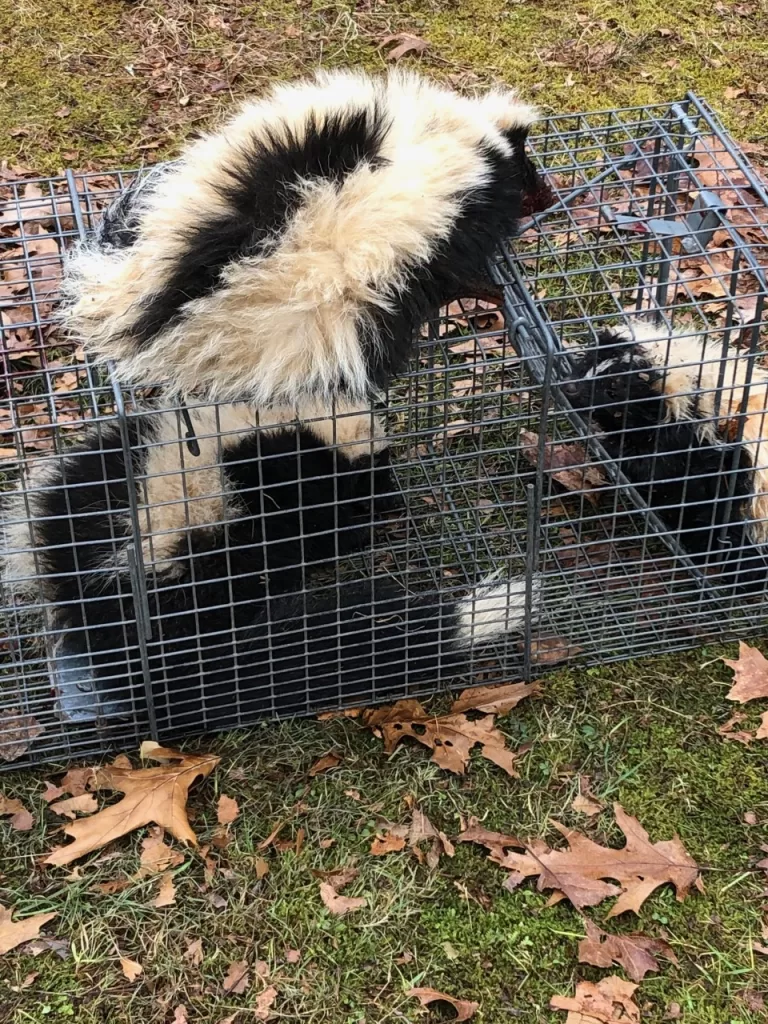
- Trapping When Needed: Humane baited traps for adults, with prompt handling per DEEP rules (within 24 hours)—no harm.
- Cleanup & Sealing: Sanitize odors, fill burrows, and seal with mesh to block returns.
- Custom Prevention: Tips for your Clinton or North Haven yard, like securing trash to cut attractants.
We ensure CT law compliance, prioritizing safety.
Prevention Tips to Avoid Skunk Issues During Breeding Season in CT
Stop problems before sprays fill the air:
- Secure garbage and pet food—skunks raid bins in East Haven during mating.
- Seal structures: Cover deck gaps, vents, foundations; inspect in February thaws.
- Yard maintenance: Remove brush piles in Hartford County.
- Deterrents: Ammonia-soaked rags near potential dens—non-toxic for nocturnal visitors.
- Monitor: Check weekly for signs to catch pre-den activity.
These reduce attractants in CT’s landscapes.
Call RF Wildlife for Skunk Removal Before Breeding Escalates in Connecticut
Don’t let skunk “love” stink up your spring—remove before litters form for easier, humane solutions. Serving Old Saybrook, Middletown, Branford, and more, RF Wildlife delivers expert service. Call our veteran-owned team at 860-510-6313 or contact online for a free quote. Clear the air today!
