
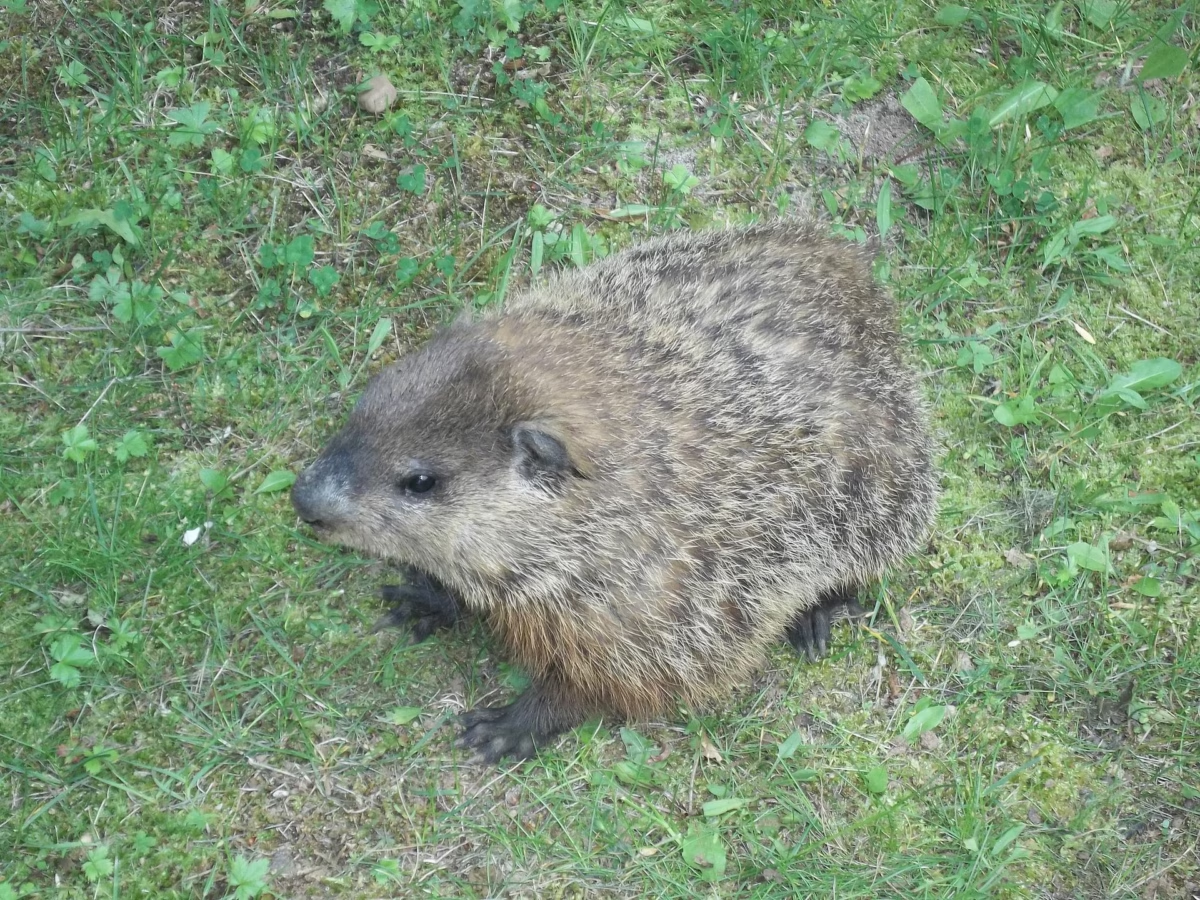
Woodchucks, also called groundhogs, are one of the most familiar nuisance animals in Connecticut. They are common around sheds, decks, gardens, field edges, retaining walls, and foundations, especially in towns where open lawn meets brush, woods, or old stonework. If you are seeing burrows, clipped vegetation, or a stocky brown animal running for a hole in the yard, there is a good chance you are dealing with a woodchuck.
If you need trapping or removal help, start with the main parent page here: groundhog removal CT. This page is the deeper look at what Connecticut woodchucks are, why they become a problem, and how their behavior affects homes, sheds, decks, gardens, and other human structures.
Need help now? Call or text RF Wildlife at 860-510-6313.
Connecticut Woodchucks: An In-Depth Look at Their Behavior, Burrows, and Impact on Human Habitats
Woodchucks (Marmota monax) are large ground-dwelling squirrels and one of the most recognizable burrowing mammals in Connecticut. Most homeowners know them as groundhogs. Wildlife people often use both names interchangeably. Whatever you call them, they are built for digging, built for living close to edge habitat, and very good at turning a quiet yard into a nuisance situation when they decide your shed, deck, porch, garden, or foundation is a good place to set up.
Connecticut DEEP notes that before early settlement, most of the state was forested and woodchucks lived mainly in scattered openings. As land was cleared for farms and houses, habitat improved for them, and the species became more abundant in Connecticut than it had been in Colonial times. :contentReference[oaicite:2]{index=2} That fits what a lot of homeowners still see today: woodchucks do best where open feeding areas and cover are close together.
What a Woodchuck Is
Woodchucks are large rodents in the squirrel family. They have heavy, compact bodies, short legs, strong shoulders, and long curved claws on the front feet. All of that is built around one main job: digging. They are not shaped like tree squirrels and they do not move like them. A woodchuck is low, solid, and powerful, with a body made for pushing soil and disappearing underground fast.
Adults are usually stocky animals with brownish-gray fur, a darker tail, and a broad head. A lot of homeowners say the woodchuck they trapped looks smaller than the one they were seeing outside. That happens all the time. In the yard, they flatten out, look broader, and seem bigger than they do once contained.
They are often confused with moles, muskrats, or even gophers by people who do not see them well. But in Connecticut, if you have a large burrow, a day-active brown animal, and damage around a shed, deck, or garden, groundhog is usually the better guess.
Why Woodchucks Do So Well in Connecticut
Connecticut is good woodchuck country. There are enough open lawns, old field edges, gardens, farms, ornamental plantings, and backyard structures to support them in a lot of towns. They especially like places where they can feed in the open but stay close to cover. A woodchuck wants a fast line back to a burrow or escape hole, not a long exposed run across open ground.
This is one reason some towns have historically been stronger than others for woodchuck work. Places with older neighborhoods, gardens, detached sheds, stone walls, deck systems, and field-edge lots often produce more calls than tighter urban areas. In the past, towns like Guilford, Madison, Glastonbury, North Haven, and Chester tended to be especially good groundhog towns for you because the habitat and property layouts make sense for the animal.
Where Woodchucks Live Around Homes
Woodchucks do not just live in wild places. A lot of the time they live right around people. The main thing they are looking for is a safe den site near food. Human structures often provide the overhead cover and edge protection they want.
- Under sheds
- Under decks and porches
- Along foundations
- Beside retaining walls
- At the edge of gardens and fields
- Near brush lines and stone walls
They also use existing terrain features well. If there is a slope, a base of a wall, or a place where they can tuck a hole into cover, they will often use it. If there is overhead protection from hawks and a quick route to open feeding, that is even better.
Burrows: The Real Reason Groundhogs Become a Problem
Most property damage starts with the burrow. A woodchuck den is not just one hole. It is usually part of a system. There may be a main entrance, secondary exits, shallow cover holes, and side chambers. Some den systems get extended over time, and what looks like a simple hole near the shed can be a much bigger underground issue.
Woodchuck burrows can create several kinds of problems for homeowners:
- Soil removed from beneath sheds and deck edges
- Settlement around footings or slab edges
- Collapsed spots in lawns
- Trip hazards near holes and travel routes
- Easy access under structures for future wildlife use
The old version of this page talked a lot about burrow complexity, chambers, hibernation dens, and escape routes. That is still worth understanding, but for a service page the main takeaway is simple: if a woodchuck is living under something on your property, that problem usually grows with time, not shrinks. :contentReference[oaicite:3]{index=3}
What Woodchucks Eat
Woodchucks are mostly plant eaters. They feed on grasses, clover, broadleaf weeds, garden plants, vegetables, and ornamental growth. That is one reason they become such a nuisance around homes. They are not just digging under the structure — they are usually eating around it too.
Garden damage is one of the fastest ways people notice them. You may see stems clipped low, rows of greens disappearing, or favorite plantings getting hammered over a few days. In more open areas, they also feed along roadsides, field margins, and around unmowed edges.
Behavior: Why They Are Hard to Catch if You Wait Too Long
Woodchucks are mostly active during the day. They often feed in the morning and later afternoon, then stay closer to cover when the heat is high. They are cautious animals, and once they learn the rhythm of a yard, they use the same routes over and over. That predictability is useful on a trapping job, but it also means they get more comfortable the longer they stay.
They are usually solitary outside of breeding season and the period when young are still with the mother. A single adult may be the main problem, but sometimes you are dealing with a female and young or with multiple active holes that make the property seem more heavily used than it is. Either way, understanding their routine is a big part of successful trapping.
Woodchucks and Hibernation in Connecticut
Woodchucks are true hibernators. In Connecticut, they spend the active season feeding and building fat reserves, then slow down and den up for winter. The old page went deep into body temperature, heart rate, and torpor. That level of detail is interesting, but the practical thing for homeowners is that seasonal activity changes. In the growing season, feeding damage and burrow traffic are easier to spot. In colder months, the signs may be quieter even when the den system is still there. :contentReference[oaicite:4]{index=4}
This is one reason woodchuck calls can feel inconsistent year to year. Activity depends on weather, yard conditions, food, den success, and how many properties in a neighborhood are attractive at the same time.
Reproduction and Why One Problem Can Turn Into Several
Woodchuck breeding happens early in the year, and young are raised in the den system. By later spring and summer, the homeowner may start noticing increased activity around a structure or garden. What seemed like one animal can become several sightings, several holes, or much heavier feeding pressure.
That matters because people often wait too long. Once the animals are established and the ground is opened up around a structure, there is more damage to correct after removal.
Why Homeowners Call RF Wildlife for Woodchucks
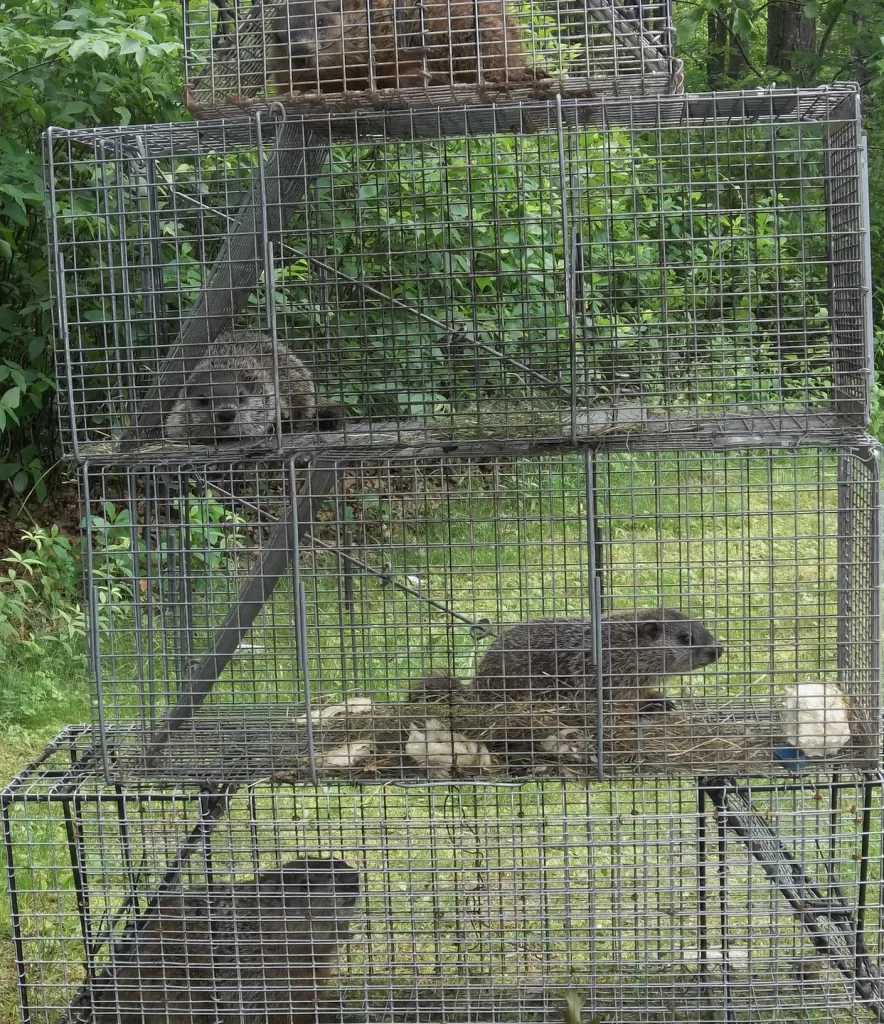
Most woodchuck calls are not about biology. They are about damage and frustration. The burrow is under the shed. The deck is settling. The garden is getting wiped out. The same animal is crossing the yard every afternoon. The dog is fixated on one corner of the property. At that point, the goal is not to read about marmots. It is to solve the problem before the burrow system gets bigger.
Connecticut DEEP’s nuisance wildlife materials make clear that licensed NWCOs are the professionals trained and regulated to handle nuisance wildlife conflicts involving species such as woodchucks. :contentReference[oaicite:5]{index=5} RF Wildlife handles woodchuck trapping and removal with the structure problem in mind: where the active den is, how the animal is moving, what secondary holes are in play, and what needs to happen after removal so the property does not stay attractive.
When a Deep-Dive Page Should Still Lead to Action
This page is here to explain the animal, but the real point is practical. If you have a woodchuck digging under a structure, living beside a foundation, or tearing through the garden, the problem is already past the “interesting wildlife” stage. At that point, removal and follow-up prevention matter more than trivia.
If you need service, go back to the main parent page here: groundhog removal CT, or call/text 860-510-6313 to have RF Wildlife take a look.
