
Groundhog & Woodchuck Removal in Connecticut
Groundhogs digging under your shed, deck, porch, or foundation usually do not leave on their own. Woodchucks expand burrows quickly and can cause ongoing damage around structures, gardens, and yards.
RF Wildlife provides professional woodchuck trapping, removal, and exclusion throughout Connecticut.
Call or Text 860-510-6313
Woodchuck Removal CT | Groundhog Trapping & Control
Groundhogs digging under your shed, deck, porch, or foundation in Connecticut? That is usually not a problem that gets better on its own. Woodchucks are powerful burrowers. Once they like a spot, they keep using it, expanding it, and wearing paths through the yard and garden. RF Wildlife provides professional woodchuck trapping and removal across Connecticut, with a lot of past calls coming from Guilford, Madison, Glastonbury, North Haven, Chester, and the surrounding towns.
Most people call them groundhogs. Some call them woodchucks. Either way, if they are burrowing under a structure or tearing through the garden, the fix is usually trapping the resident animal and then closing up the access so another one does not move in.
Call or text 860-510-6313 for woodchuck trapping, groundhog removal, and exclusion work in Connecticut.
Where I Used to See the Most Groundhog Calls
Some towns have always produced more woodchuck work than others. In the past, some of my better groundhog towns were Guilford, Madison, Glastonbury, North Haven, and Chester, along with the surrounding areas. This year has been quieter, but those are still towns where the properties, gardens, stone walls, sheds, decks, and field edges tend to make good woodchuck habitat.
Groundhog jobs also tend to cluster in nearby towns once activity picks up, especially places with gardens, old sheds, retaining walls, and open lawn meeting brush or field edge. So if you are in one of those towns or nearby, it is worth acting early when you first see digging.
Why Woodchucks Become a Problem
The biggest problem with groundhogs is not just that they eat plants. It is where they dig. A single woodchuck can undermine a shed, loosen the soil around deck footings, hollow out dirt under a slab edge, or create holes and weak spots in the yard. They also make multiple openings and short escape holes, so what looks like one burrow can turn into a whole system.
- Burrows under sheds and decks
- Digging along foundations and porches
- Large entrance holes with fresh dirt
- Garden damage and clipped vegetation
- Tripping hazards and collapsed soil in lawns
Connecticut DEEP includes woodchucks among the nuisance wildlife species NWCOs commonly handle around homes, decks, sheds, and related property damage. :contentReference[oaicite:2]{index=2}
Signs You Have a Groundhog on the Property
The most obvious sign is the hole. A woodchuck entrance is usually much larger than vole or chipmunk holes and often has a mound of fresh dirt nearby. If it is under a shed or deck, you may notice a worn path leading in and out, clipped vegetation around the opening, or a smooth dirt edge from repeated use.
- Burrow entrances roughly 10 to 12 inches wide
- Fresh dirt or spoil near the opening
- Vegetable and flower damage with stems clipped low
- Collapsed spots in the lawn from underground tunneling
- Daytime sightings near sheds, stone walls, decks, or gardens
If you are seeing a large hole under a shed, a deck corner settling, or a groundhog running the same route every day, there is a good chance you are dealing with an active den.
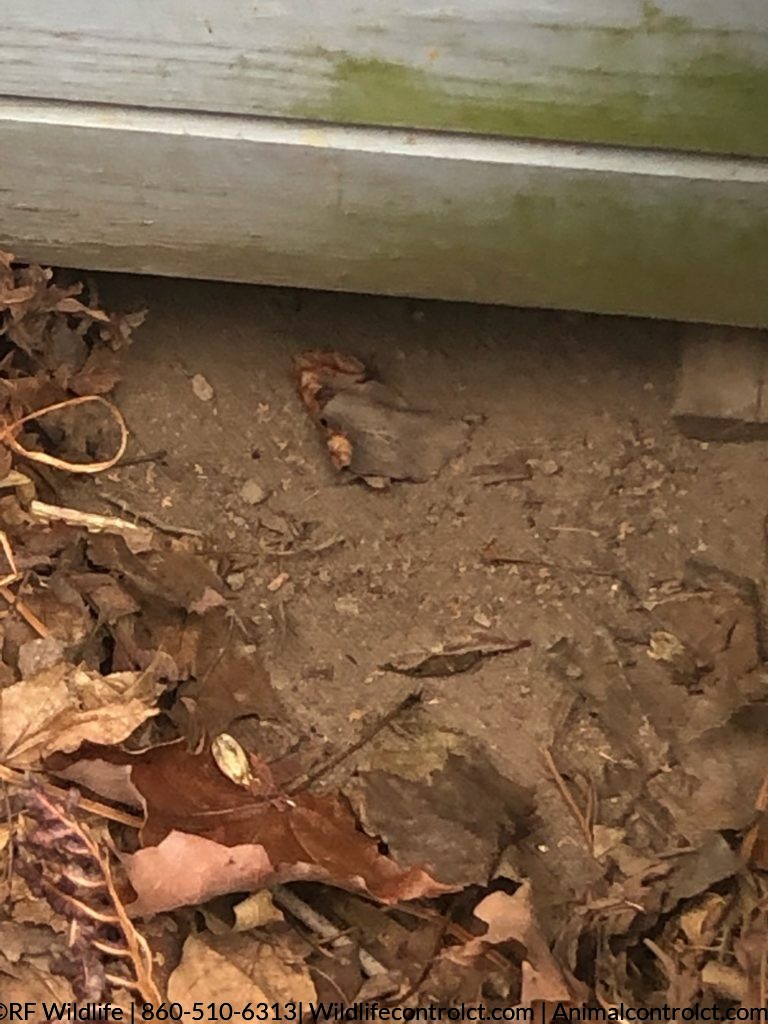
Groundhog Under a Shed
One of the most common calls is something digging under a shed. If you see a mound of dirt and a hole going underneath, a groundhog is high on the list. Skunks, raccoons, and opossums can use shed areas too, but woodchucks dig the largest, most obvious burrows under sheds in Connecticut.
I have seen woodchucks cause corners of sheds to settle because of how much soil they move. They also create side tunnels and latrine areas, so the problem can be bigger than the one visible opening suggests.
Groundhog Under a Deck
Decks are another favorite spot because overhead cover makes the animal feel protected. Hawks and other predators are a real pressure on woodchucks, so they prefer places where they can feed in the yard and make a fast sprint back to cover. That is why decks, porches, shed rows, retaining walls, and the edge of a brush line are all common spots.
Removing a woodchuck from under a deck can be easy or difficult depending on how many access points exist. I usually want to identify the main entrance, close off or monitor the secondary routes, and set the trap where the resident animal naturally wants to travel. On a lot of deck jobs, no-bait setups work better than people expect because the woodchuck already has a routine route in and out.

My Groundhog Trapping Process
Every job is a little different, but the general process is simple:
- Inspect the active burrow and look for the main entrance, secondary holes, travel paths, and damage.
- Set the trap where the resident animal wants to go, often at or near the active opening.
- Remove the woodchuck and check for signs of additional activity.
- Address the den area so another groundhog does not simply move back in.
- Recommend prevention where needed, especially around sheds, decks, gardens, and field edges.
I prefer practical setups that match the animal’s normal movement. A lot of the time, the best trap placement is more important than any bait.
Why RF Wildlife for Woodchuck Removal in Connecticut
- You deal with me directly — not a call center
- Real nuisance wildlife experience with burrowing animals and structure-related jobs
- Focus on problem areas like sheds, decks, porches, and foundations
- Service in towns that have produced strong woodchuck activity in the past, including Guilford, Madison, Glastonbury, North Haven, Chester, and surrounding towns
- Straightforward advice on removal and follow-up prevention
Connecticut DEEP’s NWCO program explains that licensed nuisance wildlife operators are trained and regulated to handle conflicts involving common mammals such as woodchucks, squirrels, raccoons, skunks, bats, and opossums. :contentReference[oaicite:3]{index=3}
Alternative Names for Groundhogs in Connecticut
Most people in Connecticut say groundhog or woodchuck. Some also say ground hog or whistlepig. No matter what name you use, if it is digging under your structure or tearing through your garden, the solution is the same: identify the active den, remove the resident animal, and keep another one from moving right back in.
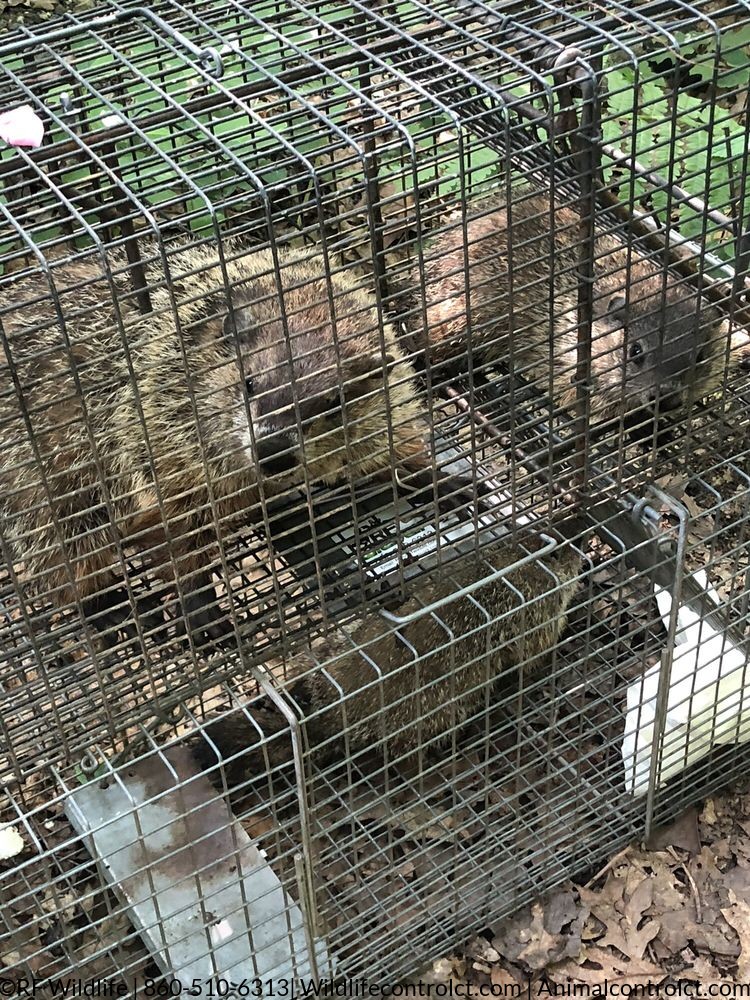
Woodchucks are Connecticut’s largest ground squirrel. They are compact, built for digging, and usually look larger when loose in the yard than they do once trapped. That is something clients mention all the time. They can flatten out, move low, and look bigger in the field than they do in a cage trap.
Adult woodchucks are stocky animals with brownish-gray fur, strong front feet, and chisel-like incisors. They are not especially fast over distance, but they are very good at getting back to cover. That is why the den location matters so much on a trapping job.
Need Groundhog Removal in Connecticut?
If you have a woodchuck under your shed, a groundhog under your deck, or a burrow threatening the yard or foundation, call before it gets worse.
Call or text RF Wildlife at 860-510-6313 for professional groundhog and woodchuck trapping in Connecticut.
Woodchuck Removal Services by Town
We provide professional woodchuck removal throughout Connecticut, including the following towns:
- Woodchuck Removal in Branford, CT
- Woodchuck Removal in Clinton, CT
- Woodchuck Removal in Madison, CT
- Woodchuck Removal in Old Saybrook, CT
- Woodchuck Removal in Westbrook, CT
- Woodchuck Removal in Essex, CT
- Woodchuck Removal in Middletown, CT
- Woodchuck Removal in Cromwell, CT
- Woodchuck Removal in Colchester, CT
- Woodchuck Removal in Waterford, CT
- Woodchuck Removal in Montville, CT
- Woodchuck Removal in North Branford, CT
- Woodchuck Removal in North Haven, CT
- Woodchuck Removal in Glastonbury, CT
- Woodchuck Removal in East Hampton, CT
- Woodchuck Removal in Durham, CT
- Woodchuck Removal in Killingworth, Chester & Deep River, CT
- Woodchuck Removal in Haddam & East Haddam, CT
- Woodchuck Removal in East Lyme, CT
- Woodchuck Removal in Lyme, CT
- Woodchuck Removal in Portland, CT
- Woodchuck Removal in Rocky Hill, CT
- Woodchuck Removal in Salem, CT
- Woodchuck Removal in Guilford, CT
For more wildlife solutions, explore our network:
- AnimalControlCT.com — full animal control
- WildlifeControlCT.com — wildlife tips & blogs
- MoleExterminators.com — mole trapping specialists
- bat-removal-and-exclusion-ct.com— Bat Removal and Exclusion
