
Raccoons in your Connecticut home or yard? These smart, persistent pests raid trash, nest in attics/chimneys, and chew wiring — causing $1,000–$5,000+ in damage and rabies risks. In towns like Old Saybrook, Essex, Deep River, Clinton, Westbrook, Madison, Guilford, Middletown, Cromwell, Portland, East Hampton, and North Haven, they’re common in spring (kit season) and fall (denning). RF Wildlife, a veteran-owned wildlife control service with 17+ years, helps homeowners identify the problem and decide: safe DIY steps or professional removal. Call or text 860-510-6313 for a free inspection if DIY isn’t enough.
Raccoons in Attic
Raccoons prefer to invade three spots on human structures. Number one is the attic, raccoon removal from the attic can be a challenge. Especially so In spring when young raccoons are present. Mother raccoons are very aggressive when defending their young. I find it best to find her nesting spot without disturbing her and her young. I use a FLIR infra red scope to find the nest. First step in raccoon removal is capturing the mother, before going hands on to remove the young. If the mother raccoon is disturbed she will move the young into the hardest to reach spot of the attic.(Murphy’s law) It is best to remove the mother raccoon first. Number two is chimneys (see below) and number three is crawl spaces under homes.
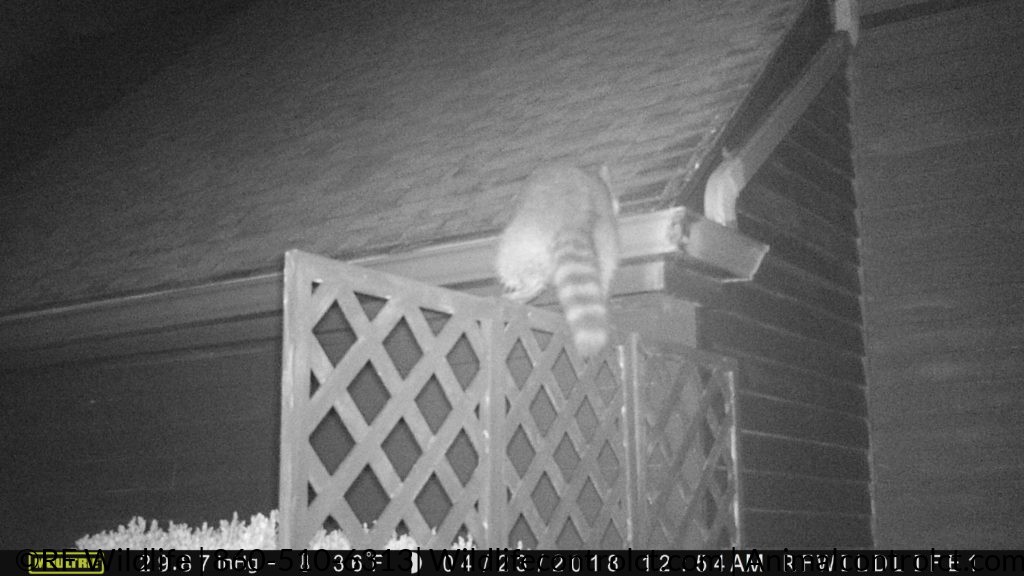
Signs of Raccoon Activity in CT
Raccoons are nocturnal and clever — they often hide until damage appears. Watch for:
- Nighttime noises (scratching, thumping, running) in attics, chimneys, or walls
- Overturned trash cans, scattered pet food, or raided bird feeders
- Small dog-like droppings (with seeds/berries) on roofs, decks, or attic floors
- Chewed soffits, vents, siding, or wiring — claw marks from climbing
- Strong urine odor or stains in enclosed spaces
In shoreline areas like Old Saybrook and Madison, raccoons target beach trash. In river towns like Middletown and Cromwell, they exploit dens near the Connecticut River.
Damage caused by Raccoons
Most of the damage caused by raccoons occurs during early spring. Female raccoons are looking for a safe place to give birth and raise their young. A raccoon that was born in a house will give birth in a house, it is all they know. this is the reason why Raccoon removal Killingworth is so common. Raccoons damage Soffits, attic vents, chimney caps, mushroom vents, ridge caps, shingles and even plywood is not safe from a raccoons attempt to break in. furthermore when the raccoon gains access to the attic they will damage insulation, wires, and even break your central air to point it at their nest (I have seen this). Raccoon droppings can contain Raccoon Roundworm eggs. Raccoons can be a carrier of diseases such as Canine Distemper and rabies.
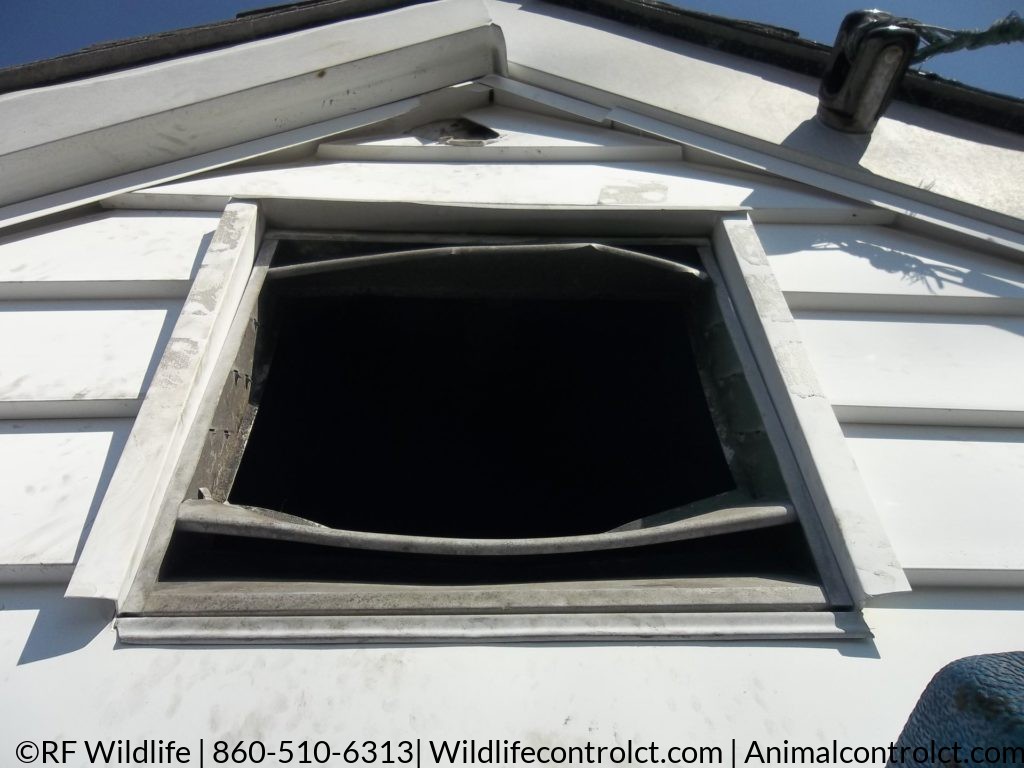
Getting rid of raccoons in your chimney.
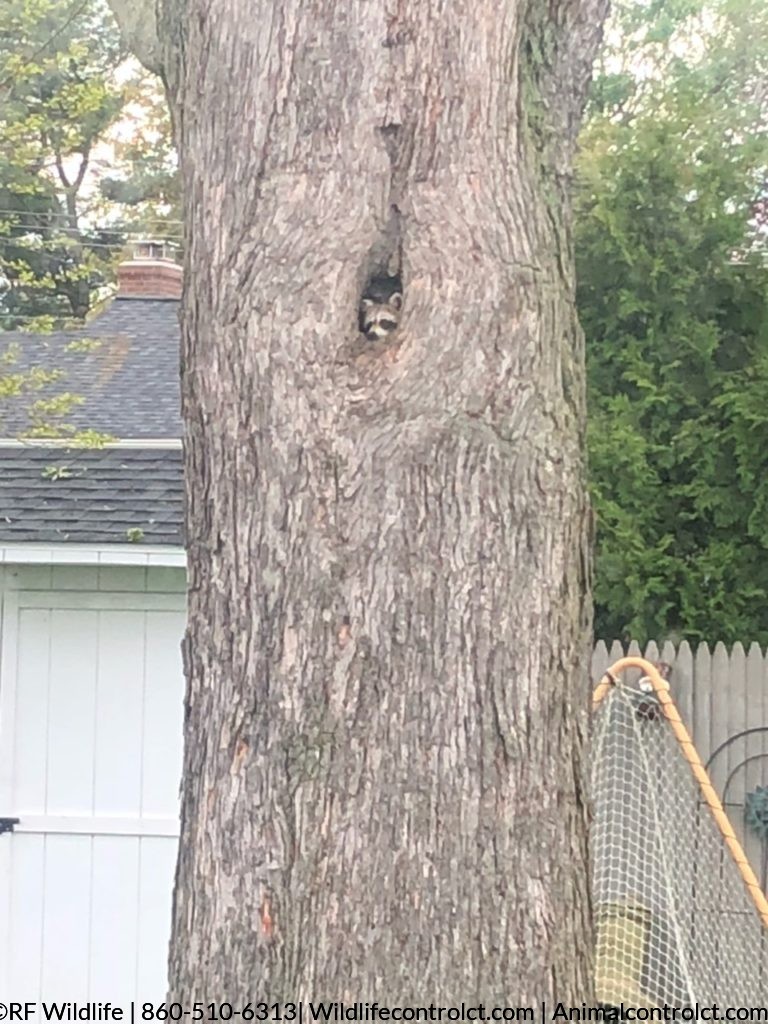
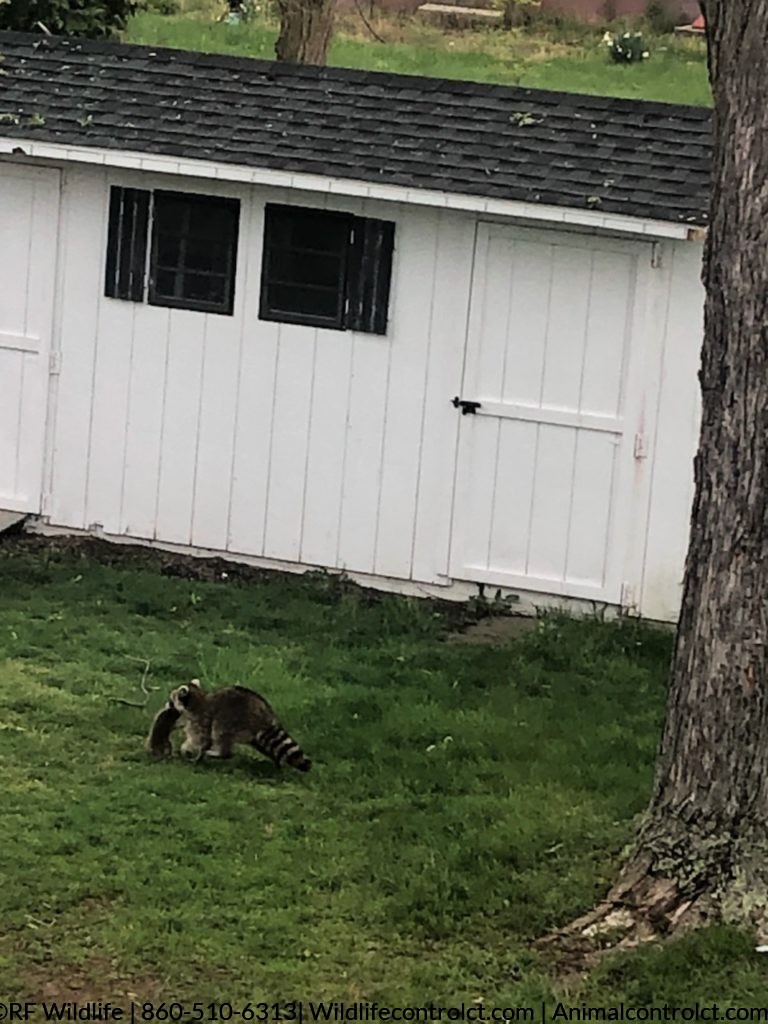
Depending on the age of the young, raccoons in the chimney can be dealt with in two ways. We either trap and remove the raccoon mother, then open the flue and grab the babies by hand, or we use eviction paste or fluid to encourage the mother raccoon to relocate her young. The eviction paste is male raccoon scents and droppings. It is smeared on top of the chimney so the mother raccoon gets it on her fur. She will smell male raccoon all over the place and it will make her think a male has found her den site and litter. Male raccoons kill young raccoons. The mother raccoon will likely do the raccoon removal herself within 72 hours at most. Below is a picture of a raccoon eviction working instantly in Old Saybrook CT when a mother raccoon had her nest above a children’s play area.
Safe DIY Tips for Minor Raccoon Issues
For small problems (e.g., single raccoon raiding trash), try these humane steps first:
- Secure trash cans with bungee cords or locks
- Remove pet food and bird feeders at night
- Trim tree branches overhanging roofs (raccoons climb)
- Install motion lights or sprinklers near entry points
- Use ammonia-soaked rags near dens (raccoons dislike the smell)
Important: Never use poisons — they’re illegal for raccoons in CT and dangerous to pets/kids. If it’s a mother with kits or damage is serious (chewed wires, attic infestation), DIY won’t work — call a pro. If you are uncomfortable With DIY call Us.
Raccoons are a Rabies Vector Species
Raccoons are considered a rabies vector species in CT. Like bats, all this means is they are on top of the list of possible carriers of rabies. furthermore Back in the early 1990’s the Northeast had a massive rabies outbreak, because of this laws were changed. It’s illegal to trap and relocate Killingworth raccoons in Connecticut. By law a raccoon can be released at the capture site, if not it must be humanly euthanized. breaking the law and releasing raccoons will result in a hefty fine, possible jail time and guaranteed loss of my NWCO license. Raccoons can also carry Leptospirosis, and Raccoon roundworm (Baylisascaris infection).
Emergency Raccoon Removal Killingworth
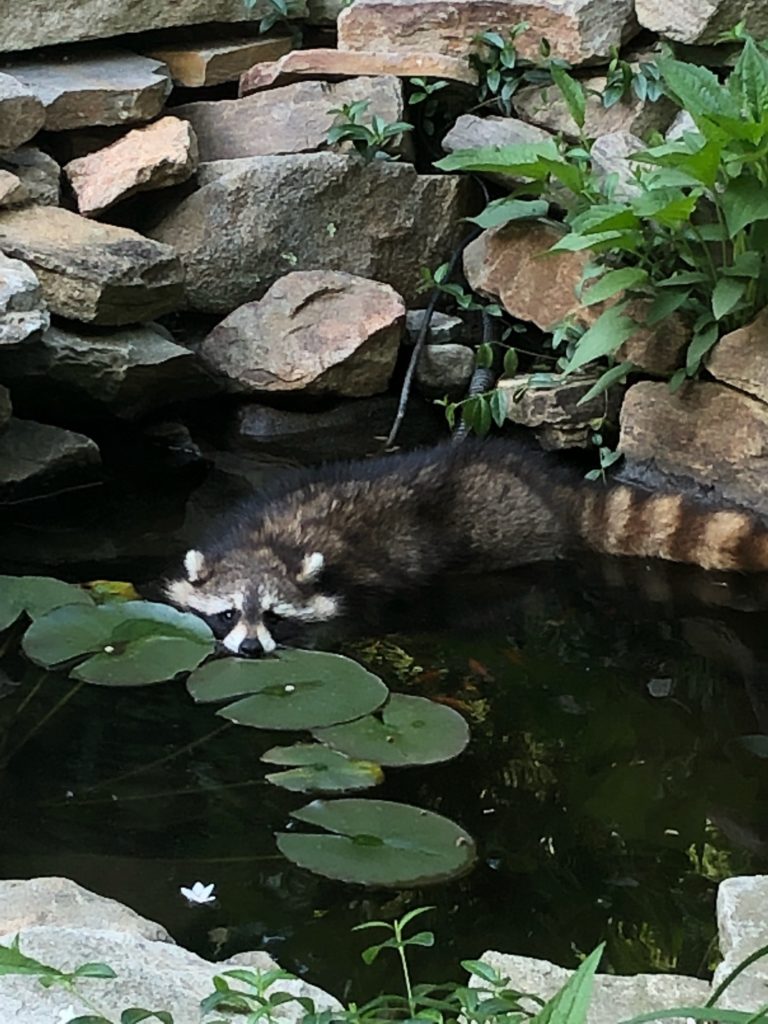
Raccoons are mostly nocturnal and sleep during the day. The exception to this rule is when a mother raccoon has a litter to feed. Raccoons are smart and can learn when it is low tide or what street has garbage picked up tomarrow. Below is a picture of a sick raccoon I captured with a catchpole out of a koi pond in Old Lyme. This raccoon appeared to have distemper, but rabies is not out of the question. The raccoon never contacted people or pets so was not tested after the raccoon removal. High fever drove it to the water source which is common with distemper. Usually these raccoons pass out and drown when trying to cool off. If you see a raccoon not acting right during the day it is best to stay away, call us 203-900-7559 or your local police department for raccoon removal CT.
When to Call a Professional Raccoon Removal Service
If you see any of these, DIY is risky and often fails:
- Multiple raccoons or babies (kits)
- Damage to wiring, insulation, or structure
- Strong odor or droppings inside the home
- Raccoon in chimney or attic (fire/structural risk)
As rabies vectors, CT DEEP prohibits relocation — licensed pros use live traps and exclusion. RF Wildlife offers safe, legal removal with repairs and prevention.
Our Raccoon Removal Process
- Free inspection — assess entry points, dens, and damage
- Live trapping — secure capture (no relocation per DEEP)
- Eviction & exclusion — one-way doors, permanent sealing
- Repairs & cleanup — fix damage
- Prevention — secure trash, trim overgrowth
Most jobs started in 1–3 days. Pricing starts at $225 — transparent quotes.
Why Choose RF Wildlife
- Veteran-owned & local — 17+ years of direct service
- DEEP-compliant & humane — no illegal relocation
- 24/7 emergency — mother raccoons with kits? We handle it
- Affordable & guaranteed — follow-up at no extra cost
- Real reviews — check Google/Yelp for CT success stories
Ready for Help? Call or text 860-510-6313 today for a free inspection. Serving a 30-mile radius from Old Saybrook including Old Saybrook, Essex, Deep River, Clinton, Westbrook, Madison, Guilford, Middletown, Cromwell, Portland, East Hampton, North Haven, and more.
Explore our network:
- WildlifeControlCT.com – wildlife tips & blogs
- MoleExterminators.com – mole trapping
RaccoonRemovalConnecticut.com — raccoon specialists
