
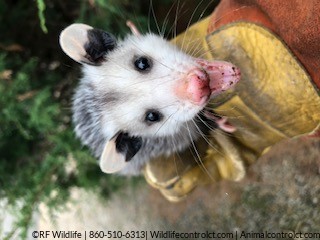
Opossums (possums) are common across Connecticut — they raid trash, nest in crawlspaces/attics/garages/sheds, and can cause damage or health concerns (leptospirosis, rabies risk, EPM in horses). They’re nocturnal, opportunistic, and love to “play dead” when threatened, but that doesn’t make them safe to handle DIY.
I’m RF Wildlife — veteran-owned since 2009. I’m based in Old Saybrook right off Rt 9 & I-95 Exit 2, so I can get to you fast — often same day or next day — for humane trapping, exclusion, cleanup, and prevention. No poisons, no relocation risks. Serving all of Connecticut for 16+ years. Call or text 860-510-6313 for fast, professional help.
One Sunday I got a panicked call from a bride’s mother in Old Lyme. The wedding was about to start outdoors — vows in two hours — and a very sick opossum had curled up right at the exact spot they were going to say “I do.” It was dying or playing dead, but the bride’s dress was about to brush over it, and everyone was in tears. I was an hour away in the middle of a bat exclusion job. I dropped everything, drove like a madman down I-95, and just made it in time to safely remove the opossum without disrupting the ceremony. One hour later, they were possum-free. I got a bunch of handshakes and pats on the back that day from guys in tuxes — one of the most memorable jobs I’ve had.
That’s wildlife — it doesn’t check the calendar. When it’s sick or cornered, it can turn a perfect day upside down. If you ever have an opossum issue (wedding or not), call or text me at 860-510-6313. Direct to me, Rich — no call center, no middleman.


Why Choose RF Wildlife for Possum Removal
- Local & fast — I’m a quarter mile from Rt 9 & I-95 at home, so quick response across CT.
- Humane methods only — live trapping, no poisons, no relocation risks.
- Veteran-owned, licensed & insured.
- 16+ years experience statewide.
Certifications & Qualifications
- NWCOA EPIC Certified (Exclusion Product Installation Certification) — trained in ventilation systems, wildlife damage prevention, and prefab exclusion products.
- Hy-Guard Exclusion Products Installer — certified on Hy-Guard professional-grade exclusion systems.
All certifications and training details are on my About page: View Full Certifications → Licensed, insured, and DEEP-compliant since 2009.
Possum Removal Process
- Free Inspection — Locate den, entry points, assess damage/odor, and check for babies or health issues. No charge for the visit — just honest advice.
- Odor-Controlled Live Trapping — Set live traps with remote cameras for real-time alerts (know within 30 minutes if caught). Minimize stress and frostbite risk.
- Safe Removal & Exclusion — Relocate humanely (per DEEP guidelines), seal entry points with hardware cloth/dig guards to prevent re-entry.
- Cleanup & Prevention — Secure trash, trim branches, remove attractants (pet food, bird feeders).
Quick start in 1–3 days, fully legal and effective. Starting at $225. Call or text 860-510-6313 — I answer directly, no call center.
What a Real Customer Says

RF Wildlife Response: Thanks Barbara! Glad we got that opossum out of your crawl space fast and clean. Always happy to help in Middlefield or anywhere in CT.
Possums and Disease Risks – What Homeowners Need to Know
Opossums (possums) are common in Connecticut, and while they’re generally not aggressive, they can carry diseases that pose risks to humans, pets, and livestock. The most serious one for horse owners is equine protozoal myeloencephalitis (EPM) — a potentially deadly neurological condition in horses.
EPM is caused by the parasite Sarcocystis neurona, which possums spread through their feces. When horses accidentally ingest contaminated feed, water, or grass, the parasite travels to the brain and spinal cord. Symptoms include:
- Muscle weakness or atrophy
- Poor coordination and stumbling
- Head tilt or facial paralysis
- Difficulty swallowing or standing
In severe cases, EPM can be fatal if not caught and treated early (usually with anti-protozoal drugs and supportive care). It’s not contagious between horses, but possum feces in pastures, barns, or feed areas can keep the cycle going.
Possums can also carry other diseases that affect people and pets, including:
- Leptospirosis — spread through urine-contaminated water or soil; causes fever, kidney/liver damage in humans and dogs
- Tuberculosis (rare in possums, but possible)
- Salmonella and other bacteria from feces
They’re not major rabies carriers (very low risk compared to raccoons/skunks/bats), but any mammal acting strange or aggressive should be treated as a potential rabies risk — never handle one yourself.
How to Reduce Risk
- Keep feed/hay elevated and covered
- Secure trash and compost bins
- Remove standing water or wet areas near barns/paddocks
- Fence off possum-attracting spots (wood piles, brush)
- If you suspect possum activity near horses or pets, call a pro immediately — early removal and exclusion prevents contamination.
If you’re dealing with a possum issue near your barn, yard, or home, call or text me at 860-510-6313 — direct to me, no call center. I can assess remotely via video consult ($125, subtracted if it becomes a full job) or come out for a free inspection. RF Wildlife – veteran-owned, 16+ years keeping CT properties safe.
What is an Opossum? (And Why They Show Up at Your House)
Opossums (or possums, as most folks call them) are the only marsupial native to North America. They’re nocturnal, meaning they’re most active at night, and they’ve got a pretty famous defense trick: “playing possum.” When they’re scared or cornered, they flop over, go limp, foam at the mouth, and look dead — it’s an involuntary thing that fools a lot of predators. They’ll even slow their breathing and heart rate. Pretty wild survival move.
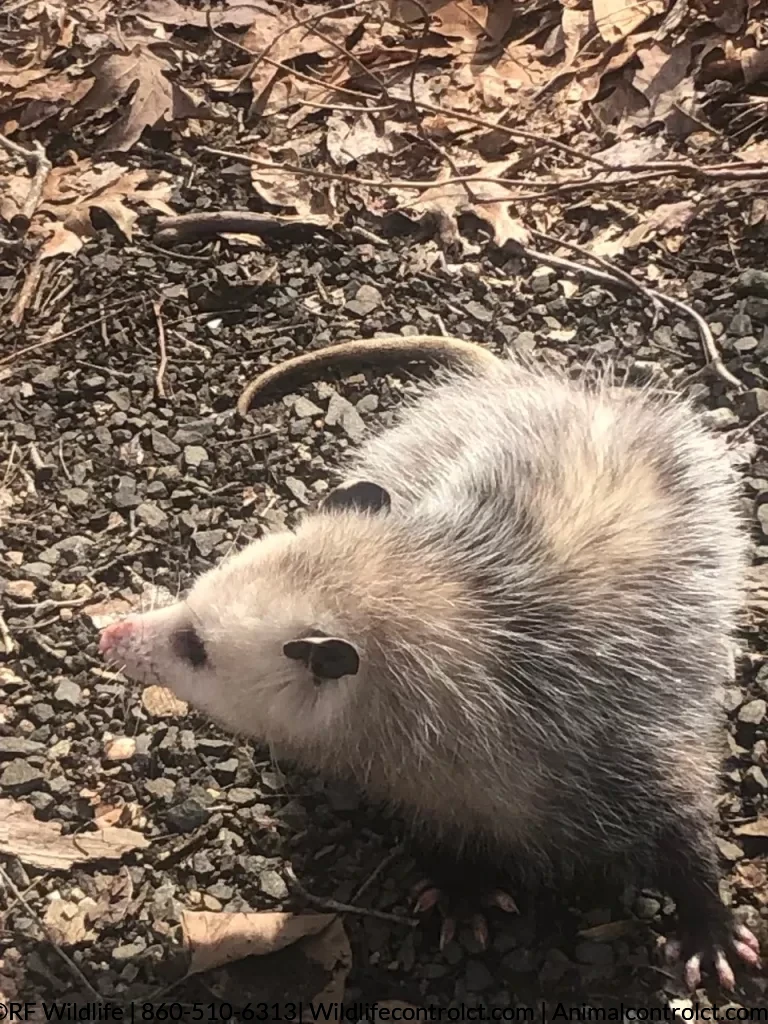
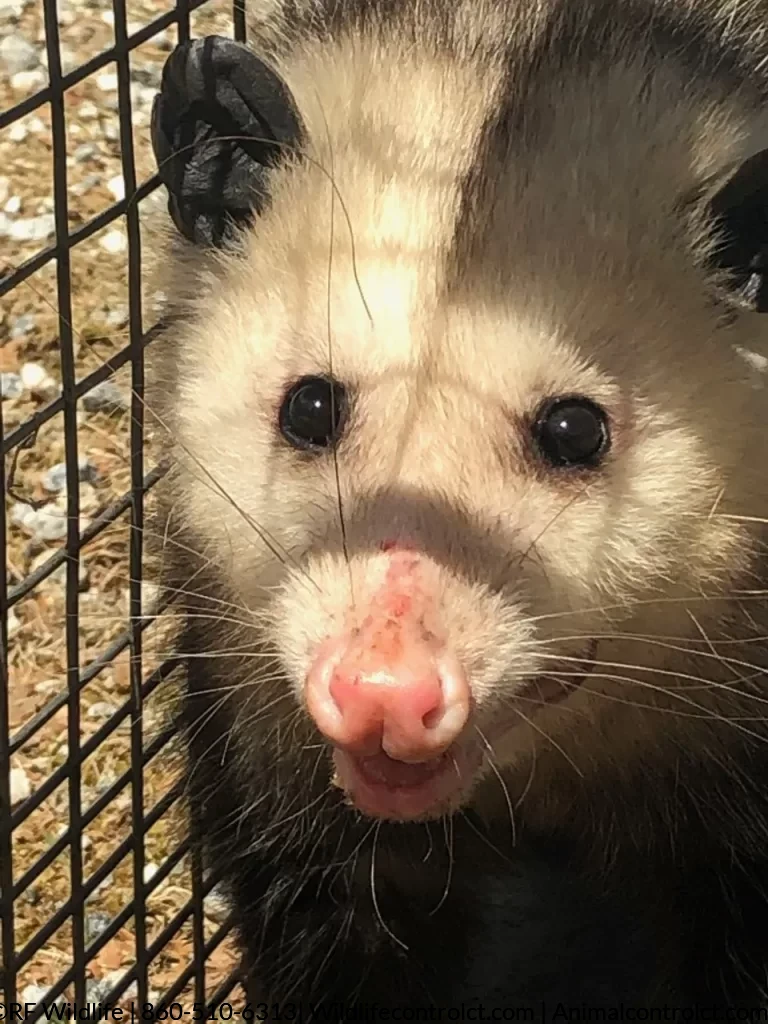
They look a bit like big rats crossed with something out of a cartoon — grayish-brown fur, long pointed snout, pink nose, sharp teeth, beady black eyes, and a long, mostly hairless tail they use like an extra hand to climb. They’ve got strong claws for digging and gripping. Adults are usually 2 feet long (including tail) and weigh 4 pounds, depending on food and location.
They breed fast too — females can have 2 litters a year (sometimes 3 in good conditions), with 6–9 babies per litter. The young are born tiny and finish growing in the pouch, then ride on mom’s back for a while. Lifespan is short — 2–4 years in the wild, maybe a bit longer if they avoid cars and predators.
In short, opossums are adaptable survivors — they thrive in urban, suburban, and rural spots across Connecticut. They’re not usually aggressive toward people or pets (they’d rather run or play dead), but they can carry diseases (leptospirosis, EPM in horses, rarely rabies), and their droppings/odor can become a real problem. If one’s in your crawlspace, under your deck, or raiding the coop, don’t try to handle it yourself — they bite when scared, and sick ones can be unpredictable.
Opossums and Their Diet – The Real Story
Opossums are opportunistic omnivores — they’ll eat pretty much anything they can find or catch. Their menu includes:
- Insects and grubs (they dig for them in lawns)
- Fruit, berries, and vegetables
- Garbage, pet food, bird seed
- Small mammals, birds, eggs
- Carrion (dead animals — they’re nature’s cleanup crew)
The popular idea that opossums are “tick-eating machines” and wipe out Lyme disease is mostly a myth. Studies have shown they do groom and eat some ticks off their own bodies, but they’re not actively hunting ticks in the environment or reducing tick populations in any meaningful way. They’ll eat ticks that are attached to them (like any animal grooming), but they don’t go after them like a vacuum cleaner in the grass. They’re just as likely to carry ticks around as they are to eat them.
That said, they’re not picky eaters at all — which is exactly why they end up in crawlspaces, under decks, in garages, chicken coops, or sheds. If there’s food, shelter, or a warm spot, they’ll take it. That adaptability is what makes them so common in suburban and rural Connecticut yards.
If you’re seeing signs of opossum activity (tracks in the snow, hissing at night, tipped trash cans, dead chickens in the coop, or that unmistakable musky odor), don’t try to handle it yourself — they bite when scared, and sick ones can be unpredictable. Call or text me at 860-510-6313 — direct to me, Rich. I can do a quick video consult ($125, subtracted if it turns into a full job) or come out for a free inspection. RF Wildlife – veteran-owned, 16+ years of getting possums out safely and humanely.
Emergency Video Consult – Wildlife Help Right Now
If an opossum is in your crawlspace, attic, garage, shed, or somewhere hard to reach — and you’re not sure if it’s safe to approach or if it’s sick — I offer Emergency Video Consults for $125.
I’ll walk you through safe containment, assessment, next steps, and whether it needs in-person removal — all via video call or phone. Just honest, fast advice from someone who’s been doing this for 16+ years.
If the consult turns into a full in-person wildlife control job, I’ll subtract the $125 from the total price. No double-paying.
Call or text 860-510-6313 now (texting is usually fastest). Or click here for full details and to get started: Emergency Video Consult – Wildlife Help Right Now →
Ready to Help? Call or text RF Wildlife now at 860-510-6313 for a free inspection and same-day help. Veteran-owned, fast, local — serving Connecticut statewide for 16+ years.
