
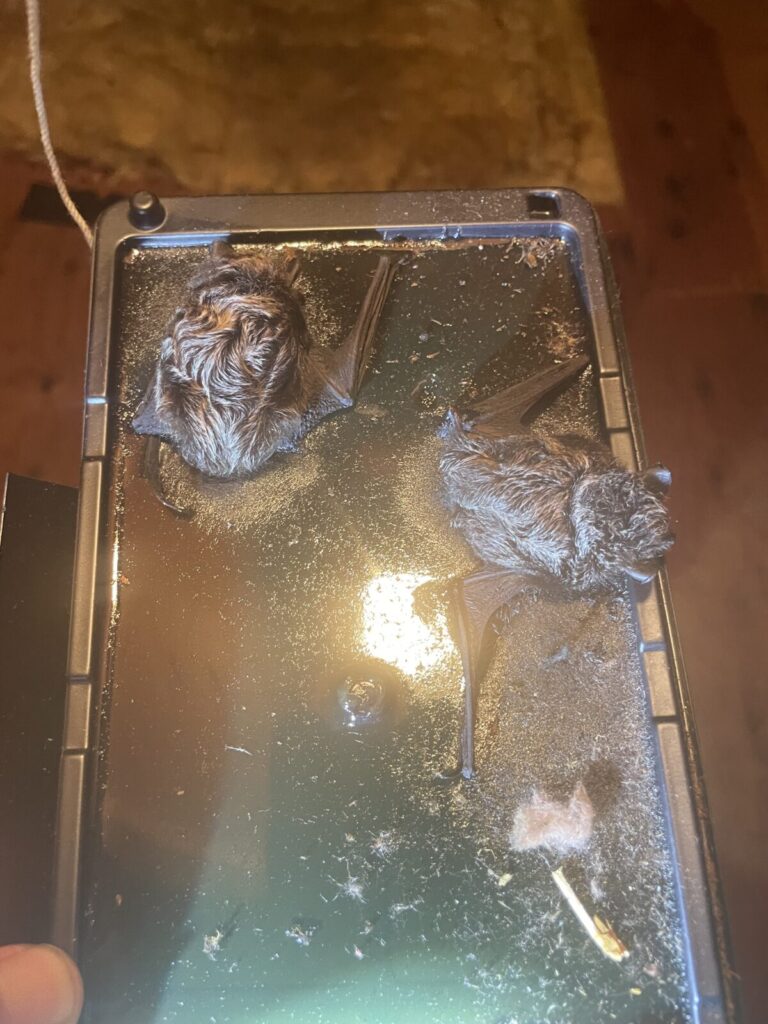
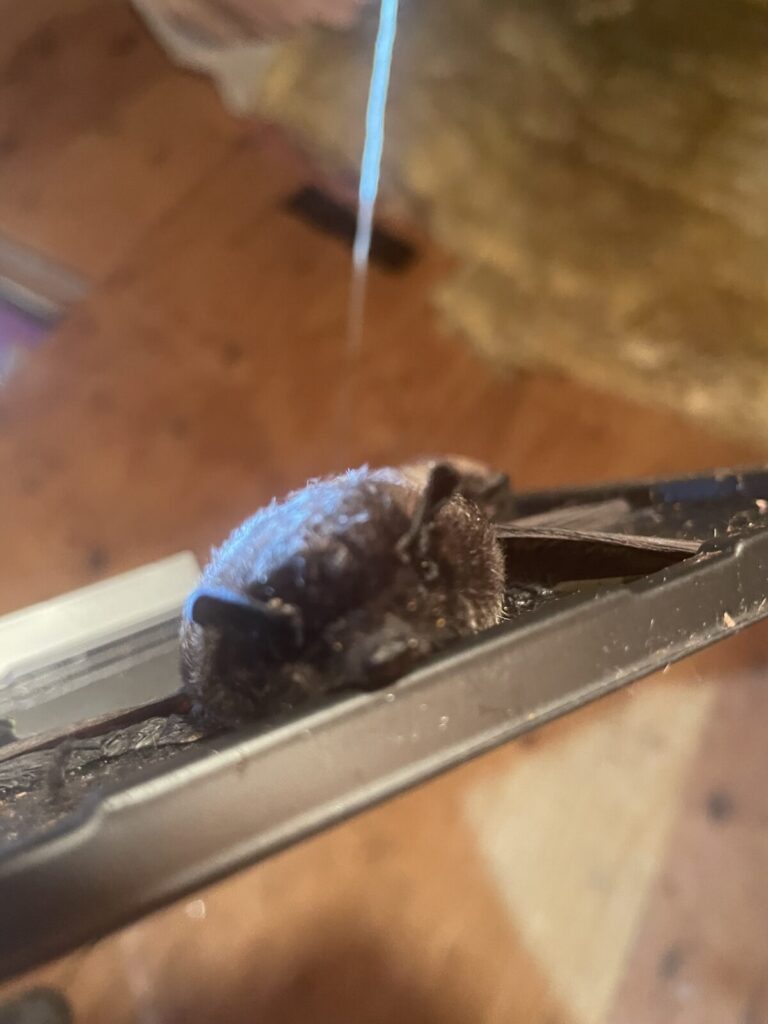
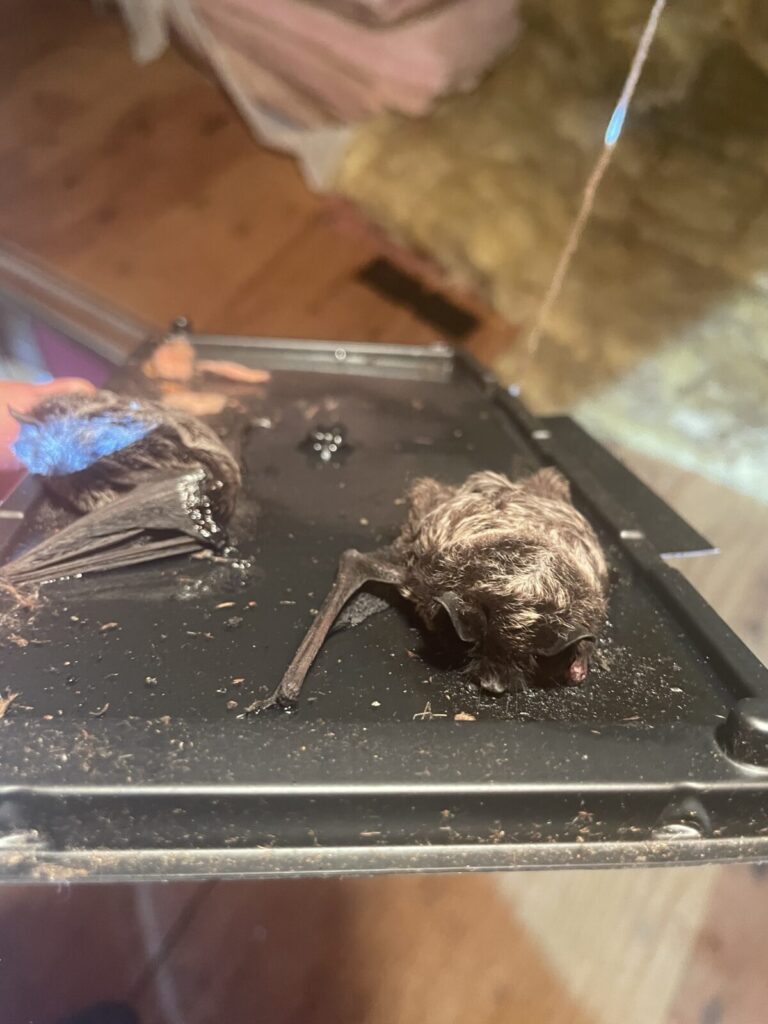
Last week in Madison, CT, I found two little brown bats stuck on glue traps set by a large pest control company.
Little brown bats are a protected species in Connecticut and have been devastated by White Nose Syndrome. Using glue traps or mothballs on bats is not only ineffective — it is often illegal and dangerous to homeowners.
What Google’s AI Frequently Recommends
Search “bat removal” or “bats in attic” in Connecticut and Google’s AI overview repeatedly pushes “Pest Control Service” companies as the solution.
Many of these businesses:
- Use glue traps — a slow, agonizing death for the bat while it struggles for hours or days.
- Recommend mothballs (naphthalene or paradichlorobenzene) — a known carcinogen that is illegal to use for bats under EPA rules and highly dangerous to breathe in your home.
- Treat protected bats like common household pests (cockroaches or ants), often using methods that violate Connecticut DEEP regulations.
Real example from New Haven County:
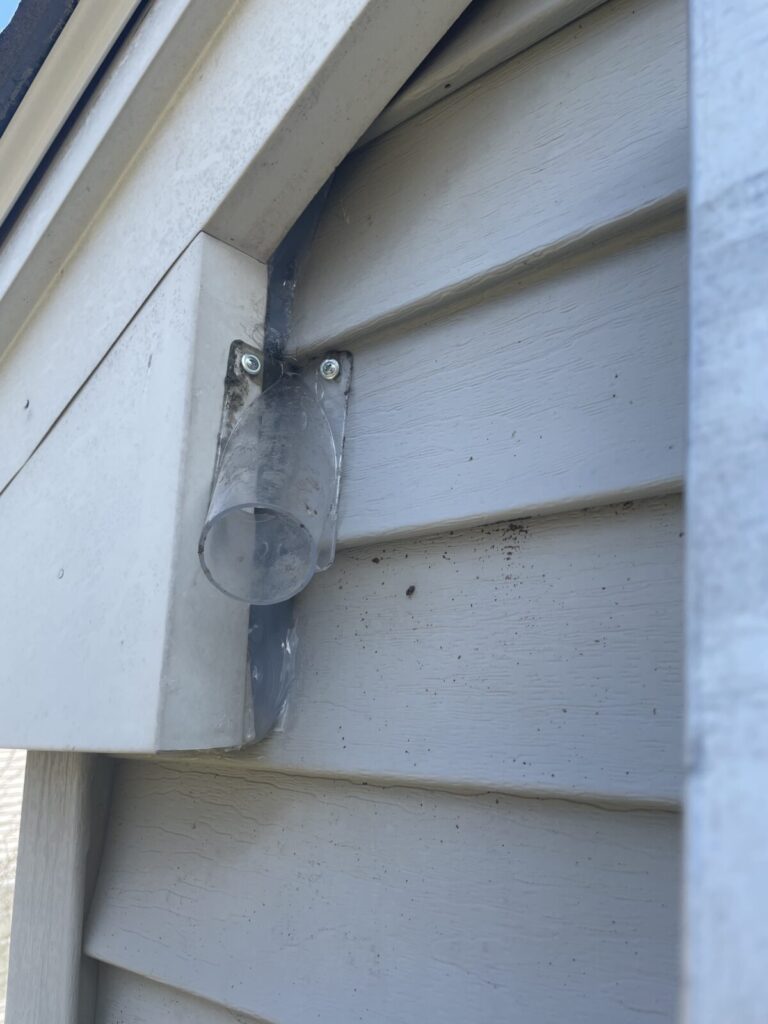
I was once called to a home where one of the biggest national pest control chains had “excluded” a bat colony. They installed the bat cone upside down — even though the cone has a clear arrow that says “face this toward the ground.” The bats couldn’t exit, got trapped inside the house, and the entire colony died. The smell was horrific — like 100 dead mice rotting in August heat and humidity. The homeowners had to deal with a nightmare cleanup.
That’s what happens when pest control companies treat bats like bugs instead of protected wildlife.
Bats are not pests. They are protected under Connecticut DEEP regulations. The correct approach is humane exclusion using properly installed one-way doors during the right season, followed by full sealing and guano cleanup.
Connecticut Law on Bats (DEEP Rules)
Bats are protected wildlife in Connecticut. Here’s what the law actually says:
- Bats are regulated under the Connecticut Department of Energy and Environmental Protection (DEEP) as nongame wildlife.
- Only licensed NWCOs (Nuisance Wildlife Control Operators) are legally allowed to handle bats in structures.
- No poisons, no glue traps (except in very limited cases when a bat is already in a living space and poses an immediate rabies risk), and no chemical repellents (including mothballs) are permitted.
- The legal and humane method is exclusion using properly installed one-way doors or cones. Exclusion is prohibited from June 1 through August 15 (maternity season) to protect flightless pups.
- After exclusion, all entry points must be permanently sealed.
Violating these rules can result in fines, license revocation, and potential criminal charges under Connecticut General Statutes.
Official Sources:
- Connecticut DEEP Wildlife Division – Nuisance Wildlife Control Operator Program
- CT DEEP Bat Conservation Guidelines
- Connecticut General Statutes § 26-40a (protected wildlife)
Look at the Map Pack
When you search for “bat removal” in Connecticut, Google usually shows a Map Pack — the box at the top with 3 local businesses, their ratings, phone numbers, and a small map. Most people click the first or second result in this box without scrolling any further.
Warning: If the top businesses in the map pack list “Pest Control Service” as their main (primary) category, be very careful.
Bats are protected wildlife, not household pests like ants or cockroaches. The proper category for legitimate bat removal should be Animal Control or Wildlife Removal.
However, even many real wildlife professionals (including me) have had to add “Pest Control Service” as a secondary category because Google heavily favors it when people search for bats. That’s why you need to look closely at the business you click on. If their main focus is spraying for bugs, termites, or bed bugs, they may not be properly equipped or trained for protected bat species.
In Connecticut, the NWCO (Nuisance Wildlife Control Operator) license is relatively easy to obtain — it only requires an 8-hour class and a 2-hour open-book test. Separate bat-specific training is not required by the state. This is why you’ll sometimes see companies with minimal wildlife experience doing bat work. (Interestingly, something like beaver trapping requires a special permit, but bat exclusions do not.)
That’s why it’s important to look beyond the map pack. A company that mainly does general pest control may not handle bats properly or legally.
What a Proper Wildlife Removal Company Does
- Inspects for entry points and guano
- Uses one-way exclusion devices (no trapping during maternity season)
- Performs safe guano cleanup (HEPA vacuum)
- Permanently seals the structure
- Offers 24/7 advice — even if you don’t hire them
Real example from Madison, CT → View the Madison Bat Removal page
Full humane bat exclusion process → See our main Bat Removal & Exclusion page
