
Bat removal is a specialized field — true bat experts are rare, and not all companies that claim to handle bats really know what they’re doing. Lately I’ve been called to homes where multiple “bat experts” have already done inspections, and the misinformation homeowners have been given is shocking. Some are telling people bats are getting in through impossible locations, others are pushing full exclusions in winter (when bats are hibernating), or suggesting methods that can back bats into living spaces.
For a detailed breakdown of the tools and one-way valves we use, see our CT Bat Exclusion & Professional Removal Process page.

Here’s what to look for when choosing a bat removal company in Connecticut:
- They should deeply understand bat behavior Bats don’t chew like squirrels or raccoons. They exploit existing construction gaps — soffit vents, ridge vents, loose flashing, gaps at roof returns, or spaces around chimneys. A real bat expert knows which species are common in CT (little brown bats, big brown bats, etc.), how they roost, when maternity season occurs (June–August), and why doing early summer exclusion is dangerous (young bats can’t fly yet, sealing adults out leaves babies to die and potentially enter living areas).
- Knowledge of construction is essential Bat exclusion is basically solving construction issues — sealing gaps that were left during building (intentionally or not). A bat pro should know building techniques, soffit construction, J-channel flashing, ridge vent systems, and how to permanently seal without compromising ventilation or structure. If the inspector can’t explain how bats are actually entering (and show you), walk away.
- They should welcome questions — not get defensive Good experts are happy to explain everything. If the person doing the inspection gets angry, dismissive, or treats questions like they’re beneath them, that’s a red flag. A real pro wants you to understand the problem and the fix.
The inspector should not just be a salesman but someone who has had dirt under their nails. Ask them if they have ever done a bat exclusion themselves. A person who has personally completed hundreds of bat exclusions will be easy to spot during the initial inspection. Sometimes I can see the main bat entry point while walking up to the door. My first question is often “Are you hearing noises in that particular spot?” before I even enter or walk around the home — it’s hilarious how often the previous “inspector” wasn’t sure until they pointed out exactly where the noises were coming from.
Beware of winter bat work Bats hibernate in winter. Sealing them out when they’re dormant can force them into living spaces as they follow air currents looking for an exit. August is the most common month for a bat in the house — young bats learning to fly sometimes get confused and end up indoors. A reputable company will never do full exclusions during maternity season (June–August) unless it’s a living-space emergency.
- Choose a Nuisance Wildlife Control Operator (NWCO), not just a pest control company Pest control focuses on bugs and often relies on chemicals. NWCOs are trained specifically for wildlife (raccoons, skunks, squirrels, bats, etc.) and use humane, poison-free methods. Many exterminators list wildlife as an “add-on” and won’t touch it during bug season. Look for a licensed NWCO first — they understand animal behavior and legal requirements (DEEP rules in CT prohibit relocation of rabies vectors like bats, raccoons, and skunks).
A true bat expert understands the specific construction of Shoreline homes. Check out my Shoreline CT Service Area to see how I handle wildlife issues from Madison to Old Saybrook.
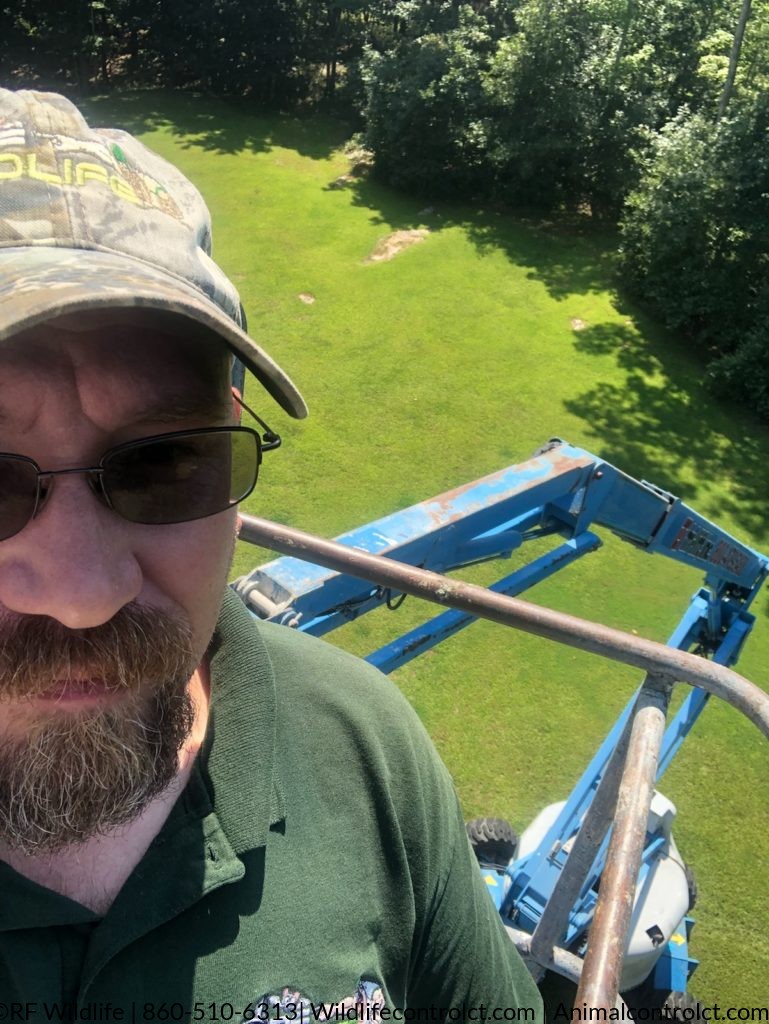
I’m Richard Fuller, owner of RF Wildlife, an Army veteran and former NCO. Attention to detail is part of my core — it’s how I was trained, and it’s how I approach every job.
I have been in the business of excluding bats for 16+ years on my own. I have many wildlife certifications through the National Wildlife Control Operators Association (NWCOA), including Rodent Standards (2022), Exclusion Product Installation (2023), EPIC Competence Integrity Service (2012), and Hy-Guard Certified Installer (2023).
I also contributed to Dr. Stephen M. Vantassel’s book, The Wildlife Damage Inspection Handbook, 3rd Edition, which is used to train professionals across the industry.
When you call me, you get that same level of precision and care — no shortcuts, no middleman, just honest, thorough work from someone who lives and breathes this field.
Call or text 860-510-6313 today — let’s solve your wildlife problem safely and humanely
