
Bats in your Old Saybrook, CT home or attic? I am based right here in Old Saybrook at 7 Brenda Lane. These protected mammals frequently roost in the salt-air-weathered eaves, soffits, ridge vents, and older attics of shoreline homes near Knollwood, Cornfield Point, Fenwick, Saybrook Point Inn, and the areas around Johnny Ad’s. They slip through tiny gaps as small as ⅜ inch, leading to guano accumulation, staining, and potential histoplasmosis risks in enclosed attic spaces. I have completed multiple bat exclusions on and right off Maple Ave and throughout these neighborhoods.
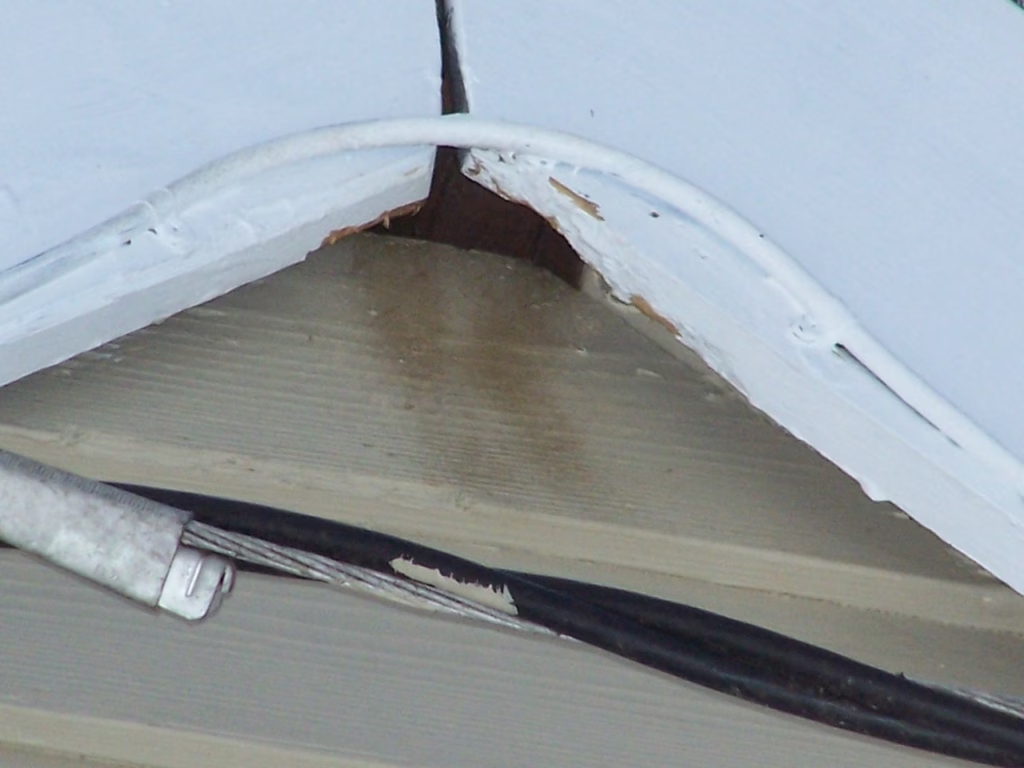
Signs of Bats in Your Old Saybrook Attic or Home
Bats are quiet and nocturnal, so many homeowners don’t realize they have a colony until it has grown significantly. Note: Per CT DEEP regulations, maternity colonies cannot be excluded during “pup season” (typically May–August) to protect flightless young.
- Fluttering or scratching sounds at dusk and dawn
- Piles of dark, pellet-shaped guano under eaves, in attics, or on windowsills
- Greasy stains or rub marks on walls and beams from bat oils
- Strong ammonia odor in enclosed spaces
- A single bat flying indoors (often a young one learning to fly)
In Old Saybrook’s coastal and wooded neighborhoods, bats commonly enter through aging soffits, roof vents, or gaps around chimneys — especially in homes near Cornfield Point, Fenwick, Knollwood, or Saybrook Point.
For a deeper look at our advanced humane exclusion techniques and statewide bat conservation efforts, visit our specialist site: Connecticut Bat Removal & Exclusion.
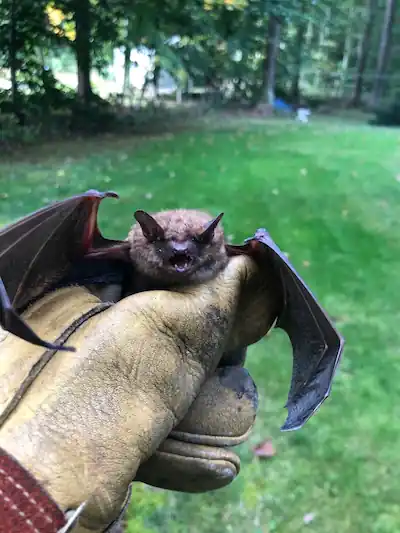
Bat in Your Old Saybrook Home Right Now?
If a bat is flying indoors or you’re worried about possible contact (especially with kids, pets, or sleeping adults), get expert guidance immediately with my Emergency Video Consult — a $125 live video call from your home. I’ll walk you through safe capture, rabies testing steps, and exactly what to do next — no wait, no guesswork.
Book Emergency Video Consult – $125 Right Now
Or call or text 860-510-6313 anytime for a free inspection and full removal. Late-night texts are welcome.
A bat flying in your living space is stressful. Here’s how to handle it safely:
- Stay calm — Most bats in homes are young and not aggressive.
- Isolate the room — Close interior doors and open one exterior window or door (turn off indoor lights).
- Do NOT touch with bare hands — Risk of bite or scratch (rabies concern).
DIY Bat Capture & Release Guidance
- If the bat may have contacted a person (especially a sleeping child or impaired adult) or a pet, it must be tested for rabies.
- Capture it safely using thick gloves, a container, and cardboard. Refrigerate the specimen but DO NOT FREEZE IT, as freezing destroys brain tissue needed for testing.
When it’s safe to release: No known contact — simply open a window at night and let the bat fly out on its own.
If you’re unsure, call 860-510-6313 — I can guide you live or respond quickly.
If a Bat May Have Contacted Someone (Rabies Testing)
Never release a bat that might have exposed a person or pet. Old Saybrook is served by the Connecticut River Area Health District (CRAHD). Contact them immediately to coordinate pickup and free rabies testing through the state lab.
- Connecticut River Area Health District (CRAHD): (860) 661-3300
- Website: crahd.org
Connecticut Rabies Exposure & Testing Process
The official paperwork for rabies testing in Connecticut is the **Request for Rabies Examination (Form OL-97A)**. The health department usually completes this form when they pick up the bat.
Direct Link to the Form (PDF)
Download CT Rabies Test Form OL-97A (PDF)
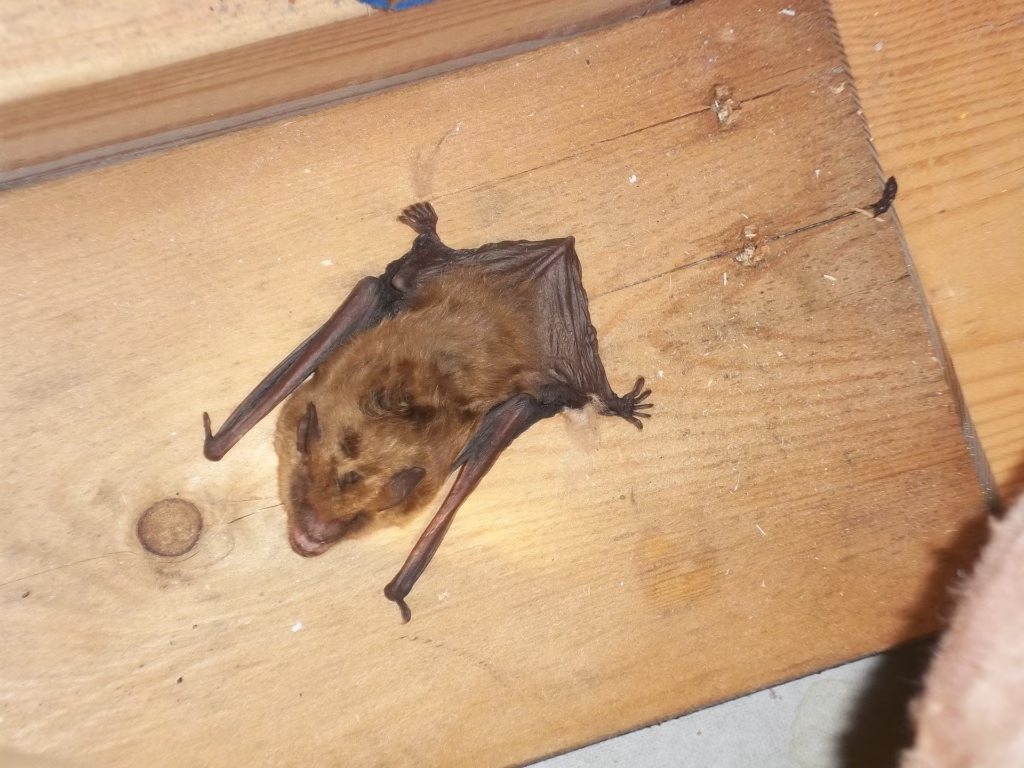
Big Brown Bats – The Most Common Species in Old Saybrook Homes
Most of the bats we encounter in homes throughout Old Saybrook, Fenwick, Knollwood, Cornfield Point, and the surrounding shoreline are Big Brown Bats (Eptesicus fuscus). These are larger, robust bats with shiny brown fur, broad wings, and a wingspan of about 13–16 inches. They are highly adaptable and frequently roost in man-made structures like attics, soffits, ridge vents, and behind shutters or siding.
Big Brown Bats are strong fliers and excellent at hunting insects over open areas such as Cornfield Point, Saybrook Point, and along the Connecticut River. They are very beneficial because they eat large quantities of mosquitoes, moths, and beetles every night.
However, they can become a nuisance when they form maternity colonies inside homes. In Connecticut, Big Brown Bat maternity season typically runs from June through August. During this time, mother bats give birth to one or two pups that are unable to fly for several weeks. Because these young bats are flightless and completely dependent on their mothers, CT DEEP regulations prohibit any exclusion work during this period to avoid trapping flightless pups inside the attic, which would lead to them dying and causing major odor and health issues.
Once the pups are old enough to fly (usually by late August or early September), we can safely install one-way exclusion devices so the entire colony can exit naturally and not return.
The Little Brown Bat – A Once-Common Species Now Rare in Our Area
Our other well-known mosquito-eating bat, the Little Brown Bat (Myotis lucifugus), was once extremely common in Connecticut homes and attics. Unfortunately, this species has been nearly wiped out across much of the United States and Canada by a devastating fungal disease called White-Nose Syndrome.
I have not seen a colony of Little Brown Bats in Old Saybrook in many years. We occasionally find small colonies in nearby towns such as Guilford, which gives us hope that they may slowly recover in certain areas. Until then, the vast majority of bat issues we handle in Old Saybrook homes involve Big Brown Bats.
Certifications & Expertise:
We are NWCOA Rodent Standards Certified and a Hy-Guard Certified Installer. We specialize in professional bat guano cleanup and humane wildlife exclusion in Old Saybrook and surrounding shoreline towns.
Don’t trust your home to an amateur. As an accredited contributor to The Wildlife Damage Inspection Handbook (3rd Edition), the national training standard for wildlife professionals, RF Wildlife uses field-tested, humane methods that most local exterminators simply don’t know.
Our Humane Bat Exclusion Process in Old Saybrook, CT
At RF Wildlife, we never trap or relocate bats. Instead, we use a proven, DEEP-compliant humane exclusion method that allows the colony to leave safely on its own and prevents them from returning.
Here’s how our bat exclusion process works in Ledyard homes:
- Thorough Inspection – We carefully inspect the entire home, attic, soffits, ridge vents, and chimneys to locate all entry points and determine colony size.
- One-Way Exclusion Devices – We install specially designed one-way doors or cones at the main entry points. Bats can exit to feed at night but cannot get back in.
- Waiting Period – The devices stay in place for 4–10 nights (depending on weather and activity) until the entire colony has left, including any young bats that were still learning to fly.
- Permanent Sealing – Once the bats are gone, we seal every entry point with high-quality materials including heavy-duty mesh, metal flashing, foam, and caulk so they can never return.
- Guano Cleanup (if needed) – We safely remove accumulated droppings or subcontract big jobs.
Every exclusion comes with a full 3-year guarantee on our sealing work. If bats return through any area we sealed, we’ll come back and fix it at no additional charge.
Ready to get bats out of your Old Saybrook home for good?
Call or Text 860-510-6313 for a Free Bat Inspection
I personally answer every call and handle every exclusion myself. Fast, local, and humane service you can trust.
