
As February 2026 rolls in, Connecticut’s striped skunks are kicking off their annual breeding season—typically running from early February through mid-March, with peak mating activity around late February. This is when males roam widely (up to 5 miles) in search of females, leading to more sightings, sprays, and roadkill odors across the state. If you’re in shoreline towns like Old Saybrook or Branford, you might notice increased activity now, as milder coastal winters keep skunks more active than in inland areas. At RF Wildlife, we’re already fielding more calls for humane skunk removal during this time—don’t wait for a stinky surprise; call our veteran-owned team (🪂🪖) at 860-510-6313 for fast help.
During February and March, we see a massive spike in skunk activity. See our [2026 Skunk Breeding Forecast] for what to expect in Middlesex County right now.
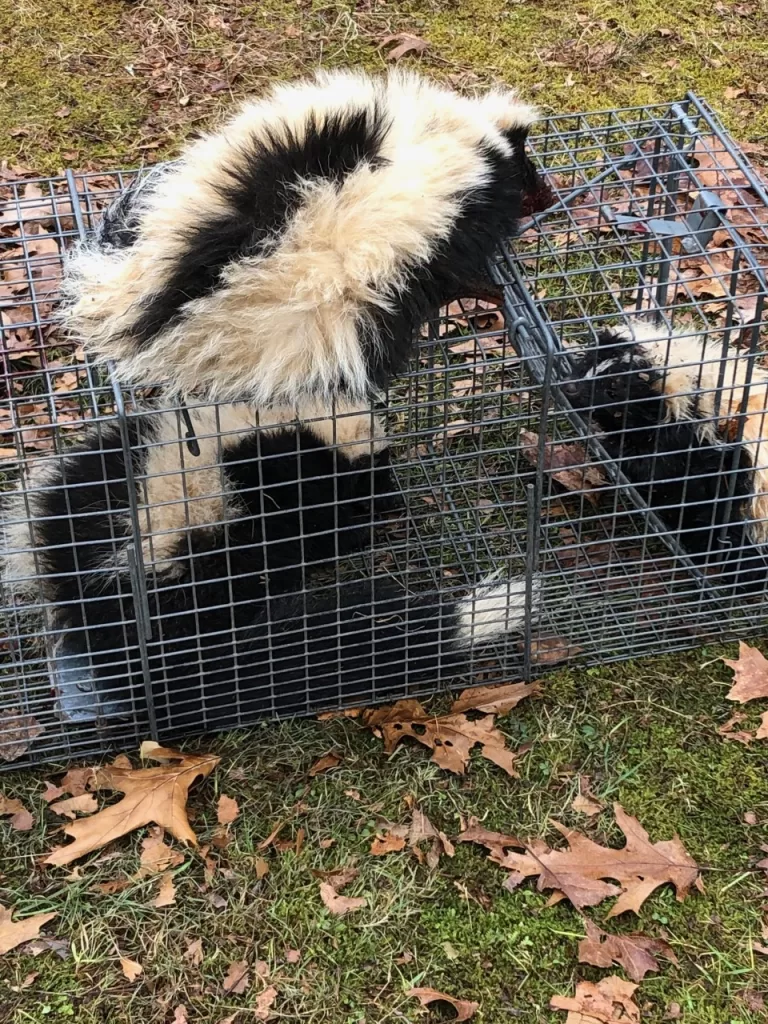
What Happens During Skunk Mating Season in CT?
Skunks in Connecticut start their courtship in February, triggered by longer days and milder temps. Males become territorial, often spraying during fights over females, while females prepare dens for litters of 4-8 kits born in April-June. Without true hibernation, skunks hunker down during harsh snow but emerge during thaws, making February a prime time for invasions under decks, sheds, or porches.
In urban-suburban spots like New Haven County or Middlesex County, this season means:
- More Roaming & Odors: Males travel far, leading to frequent road encounters and that pungent smell from skunk-on-skunk sprays or accidents.
- Den Building: Females seek cozy spots in residential areas, digging burrows that can attract other wildlife like foxes.
- Pet Risks: Dogs often investigate skunks, resulting in sprays—common in towns like Westbrook or Madison where populations thrive due to mild climates and abundant food.
Spotting these early can prevent bigger issues like lawn damage or health risks (rabies, parasites).
Signs of Skunk Activity During Breeding Season in Connecticut
Watch for these red flags in your CT yard, especially in February:
- Strong Musky Odors: Not just from sprays—breeding fights amplify scents, lingering for days.
- Digging & Holes: Cone-shaped divots (3-4 inches) from grub hunts; dens under structures with 4-6 inch entrances.
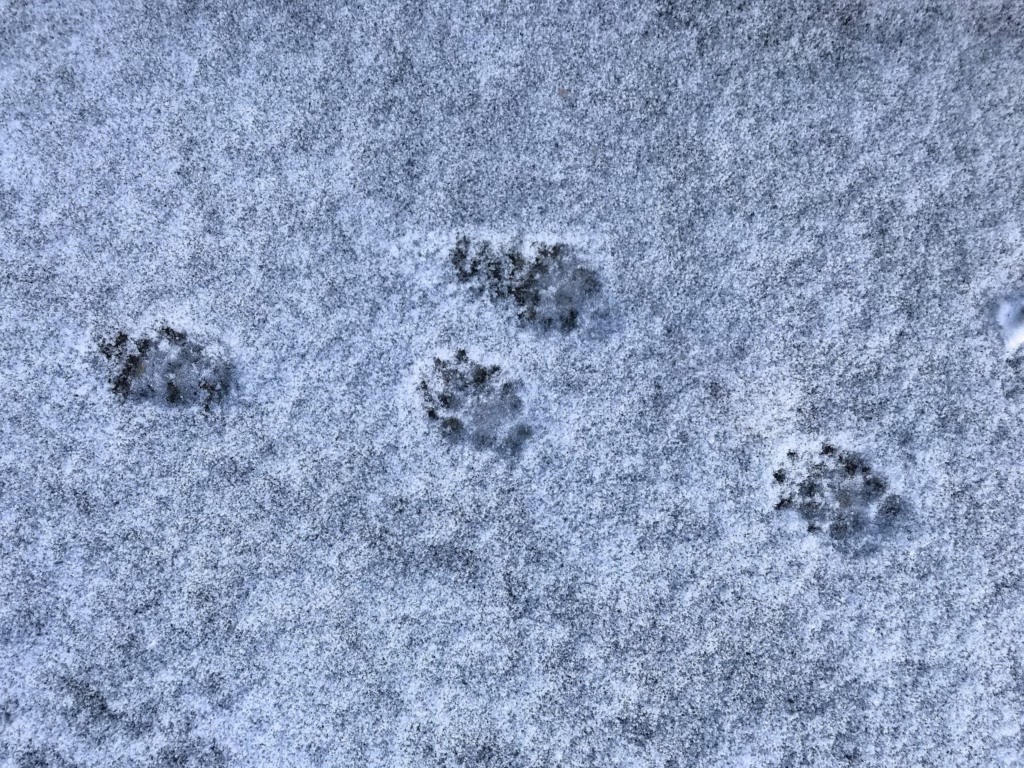
- Tracks & Droppings: Five-toed prints (like tiny hands) and tubular feces with insect bits near entry points.
- Nocturnal Noises: Scratching or rustling under decks at dusk; bolder males out during the day.
- Pet Encounters: If your dog comes home reeking, it’s a sign—happens more in populated areas like Guilford or East Haven.
If you see these in Old Saybrook or nearby, act fast—breeding season escalates quickly.
Humane Prevention Tips for Skunk Mating Season in CT
Prevent infestations before kits arrive in spring:
- Secure Your Yard: Install motion lights/sprinklers to deter roamers; fence gardens and seal deck gaps with heavy mesh.
- Remove Attractants: Lock trash bins, clean up birdseed, and treat lawns for grubs (use nematodes in Feb for early control).
- Pet Precautions: Leash dogs at night; make noise before letting them out to give skunks time to flee.
- Winter Checks: Inspect sheds/porches during thaws—block entries to avoid dens forming. Look for tracks in the snow.
- Odor Remedies: If sprayed, use a mix of hydrogen peroxide, baking soda, and dish soap—avoid tomato juice myths.
These steps work well in CT’s variable weather, but for established issues, professional exclusion is key.
Why Call RF Wildlife for Skunk Removal During Breeding Season?
DIY attempts during mating season risk sprays, bites, or illegal relocation (banned in CT due to rabies). As a veteran-owned (🪂🪖) and licensed NWCO service with 16+ years in Connecticut wildlife control, RF Wildlife handles it humanely:
- Safe Trapping: Baited, no-harm traps for quick eviction—compliant with DEEP 24-hour rules.
- Trap Camera Monitoring — We use remote cameras on traps for real-time alerts — know within 30 minutes if a skunk is caught, so no long waits or unnecessary suffering. Fast response, every time.
- Exclusion & Cleanup: Seal entries, remove odors, and repair damage without poisons.
- Seasonal Expertise: We know CT breeding patterns—faster response in shoreline hotspots like Clinton or Niantic.
- Guaranteed Results: Free inspections, pet-safe methods, and prevention plans to stop future visits.
Serving Middlesex, New Haven, and Hartford counties—don’t let skunks ruin your February.
Get Humane Skunk Removal Help in Connecticut Now
Skunk breeding season is here—protect your home and pets before things escalate. Contact RF Wildlife for expert skunk trapping and prevention in Old Saybrook, Branford, and beyond. Call 860-510-6313 today or use contact form. Follow @Rfwild1 on X for more CT wildlife updates!
Male Skunks Travel long distances
The behavior of male skunks during this period is marked by their distinct musky scent, which serves as a means of communication with potential mates and rivals. The scent is released through glands near the base of their tails, creating a pungent odor that can be quite noticeable, particularly during the breeding season. This scent serves to establish dominance and attract females in the vicinity.
However, the consequences of skunk breeding season are not limited to olfactory disturbances. Female skunks, especially pregnant ones, may seek shelter in and around human structures such as sheds, decks, or crawlspaces. These locations provide a secure and secluded environment for giving birth and raising their young. Unfortunately, this can pose a series of challenges for homeowners.
Female Skunk Under a Shed, Deck, or Crawlspace
Having a female skunk under a shed, deck, or crawlspace can lead to various issues. Firstly, the odor from their musk can become more concentrated in enclosed spaces, making it unpleasant for residents nearby. Additionally, the presence of skunks may result in property damage as they may dig or burrow to create a nesting site. Furthermore, there is the potential for conflict with pets, as skunks may feel threatened and spray defensively if cornered.
To mitigate these challenges, it is advisable for homeowners to take preventive measures, such as sealing potential entry points and securing outdoor structures. If a skunk infestation is suspected, it is best to seek professional assistance to safely and humanely address the situation.
In conclusion, the skunk breeding season in Connecticut brings about increased skunk activity, with male skunks covering significant distances in search of mates. Homeowners should be aware of the potential challenges associated with having a female skunk under a shed, deck, or crawlspace and take proactive steps to prevent such occurrences. Understanding skunk behavior during the breeding season can contribute to a more harmonious coexistence between these fascinating creatures and the human residents of Connecticut. For Help with Skunk Removal Give RF Wildlife a call at 860-510-6313
Skunk season is here — protect your property today. For more wildlife and pest control solutions across Connecticut, explore our full network of veteran-owned sites:
- AnimalControlCT.com – Complete animal control & wildlife removal services
- WildlifeControlCT.com – Expert tips, blogs, and guides on bats, squirrels, skunks & more
- RaccoonRemovalConnecticut.com – Specialized raccoon trapping and exclusion
- MoleExterminators.com – Professional mole trapping and lawn protection
All operated by RF Wildlife – serving a 30-mile radius from Old Saybrook and beyond. Call or text 860-510-6313 for immediate help.
