
Connecticut Bat Alert – Exclusion Window Closing
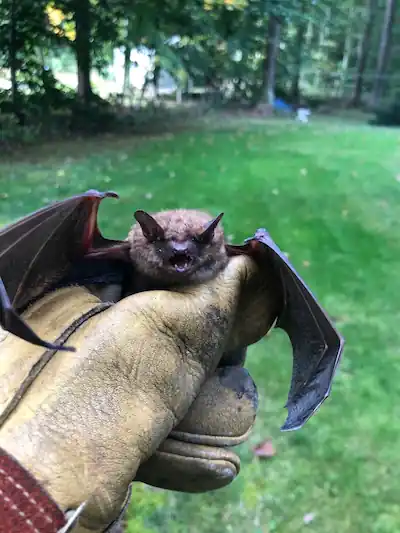

Bats in the Attic or Flying in the House?
Bat problems don’t go away on their own. Colonies grow, guano builds up, and entry points get worse over time. Proper exclusion is the only permanent solution.
✅ DEEP-Compliant Bat Exclusion | ✅ Humane One-Way Removal | ✅ 17+ Years Experience
Call or text for fast response and expert guidance — including emergency bat-in-house situations
Bats in your Killingworth, Chester, or Deep River home or attic? These protected mammals frequently roost in the weathered eaves, soffits, ridge vents, and older attics of shoreline and rural homes near the Connecticut River, Chatfield Hollow State Park, and the heavily wooded neighborhoods throughout the area. They squeeze through incredibly small gaps as tiny as ⅜ of an inch, often going unnoticed until guano begins to pile up, causing staining on beams and ceilings and raising serious concerns about histoplasmosis in enclosed attic spaces.
In the charming rural homes and historic properties of Killingworth, Chester, and Deep River, bats are a common sight year-round, but maternity colonies typically form from May through August. RF Wildlife provides fully DEEP-compliant bat removal in these towns using humane exclusion only — no trapping or exclusion during maternity season and no relocation of protected bats. As a veteran-owned business with 16+ years of experience serving the shoreline and Middlesex County, I personally handle every inspection and every exclusion job myself using specialized equipment and proven methods.
Call or text 860-510-6313 today for a free inspection and protect your home safely.
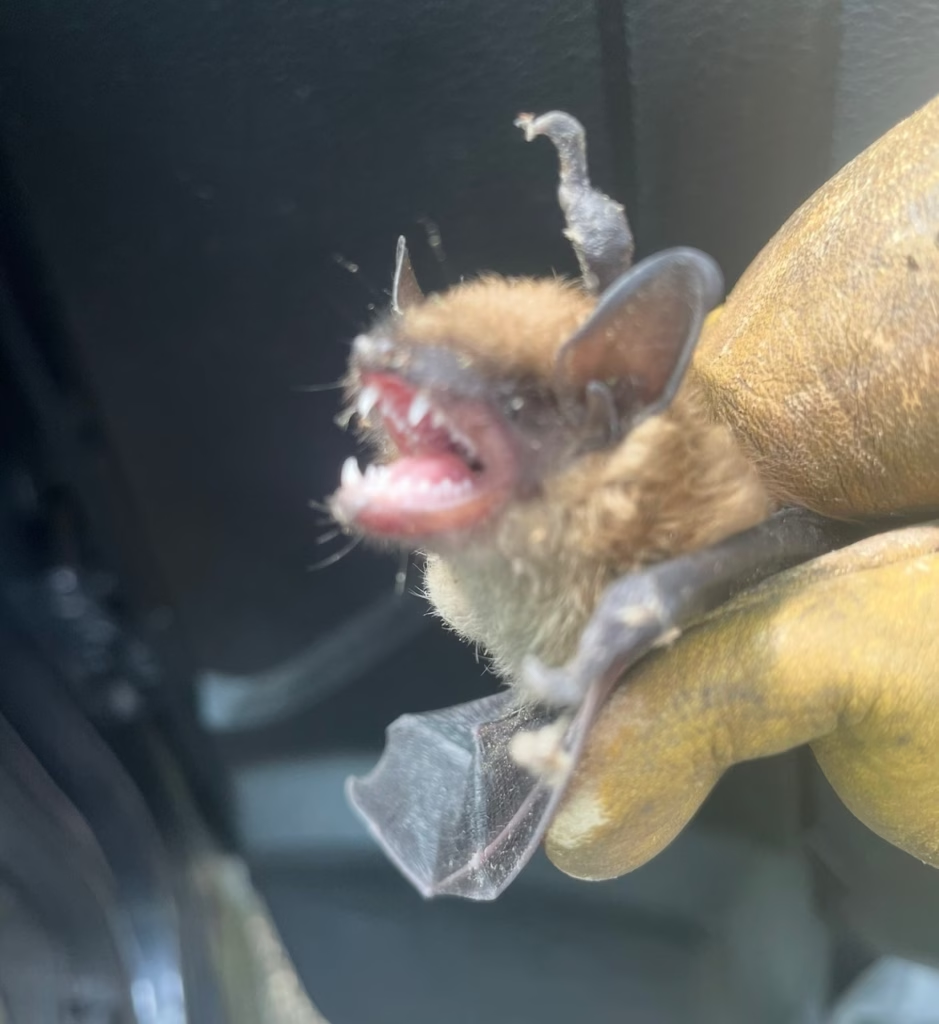
Signs of Bats in Your Killingworth, Chester or Deep River Attic or Home
Bats are quiet and nocturnal — signs often go unnoticed until a colony grows.
- Fluttering or scratching sounds at dusk/dawn
- Guano (droppings) piles under eaves, in attics, or on windows
- Grease marks or stains on walls from bat oils
- Strong ammonia odor from urine in enclosed spaces
- Single bat flying in living space (often a young one learning to fly)
In the rural and wooded homes of Killingworth, Chester, and Deep River, bats commonly enter small gaps in eaves, soffits, or chimneys — especially near the Connecticut River and Chatfield Hollow State Park.
For a deep dive into our advanced exclusion techniques and state-wide bat conservation efforts, visit our dedicated specialist Page: Connecticut Bat Removal & Exclusion.
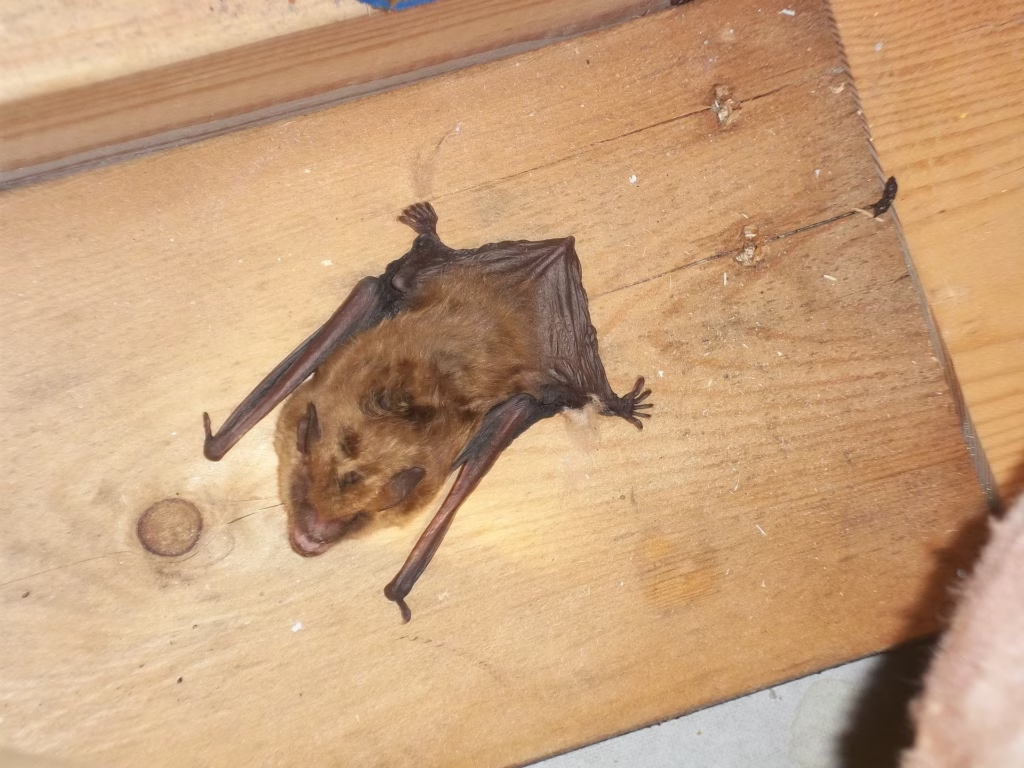
Emergency: Bat in the House – What to Do Right Now
Bat in your Killingworth, Chester or Deep River CT Home Right Now?
If a bat is flying indoors or you’re worried about possible contact (especially with kids, pets, or sleeping adults), get expert guidance immediately with my Emergency Video Consult — $125 live video call from your home. I’ll walk you through safe capture, rabies testing steps, and what to do next — no wait, no guesswork.
Book Emergency Video Consult – $125 Right Now
Or call/text 860-510-6313 for a free inspection and full removal. Late texts are fine.
A bat flying in your living space is stressful — here’s how to handle it safely:
- Stay calm — Most bats in homes are young learning to fly and not aggressive.
- Isolate it — Close interior doors, open a window/door to outside (turn off lights inside).
- Do NOT touch with bare hands — Risk of bite/scratch (rabies concern).
- Critical Instructions for Bat ExposureThe advice to not release the bat is vital. Because bat bites can be microscopic, state protocol requires testing any bat found in a room with a sleeping person, a child, or an impaired adult.CT.GOV-Connecticut’s Official State Website (.gov)
- Do Not Touch: Use heavy gloves and a container to safely capture the bat if you can do so without damaging its head (which is needed for testing).
- Call Animal Control First: They can often assist with the capture and are the authorized officials to submit the specimen for testing. Call RF Wildlife after to determine if you have a colony of bats in the home
- Medical Consultation: Even if you don’t see a bite, call the DPH Epidemiology line at (860) 509-7994 to determine if you need the rabies vaccine series.
DIY Guide on bat capture release or for rabies testing
- If the bat may have contacted a person (especially sleeping, child, or impaired adult) or pet.
- Capture safely (gloves, container, cardboard to slide over) — refrigerate (don’t freeze), contact local health department for testing.
When it’s OK to let it go: No possible contact — open window and let it fly out.
If unsure, call 860-510-6313 — I can guide you live or come out fast.
If a Bat May Have Contacted Someone (Rabies Testing)
If a bat has potentially contacted a person or pet, do not release it — it must be tested for rabies. Capture it safely, keep it cool (refrigerate), and contact your local health department immediately for pickup and testing (free through the CT state lab).
Local Health Departments for Rabies Testing
For Killingworth, Chester, and Deep River residents, contact the following for bat testing and guidance:
- Killingworth Health Department – (860) 663-1765
- Chester Health Department – (860) 526-0013
- Deep River Health Department – (860) 526-6020
Connecticut Rabies exposure and animal testing
The official paperwork for rabies exposure and animal testing in Connecticut is the Request for Rabies Examination (Form OL-97A). The health Department or whoever is picking up the bat will typically have this form. I tell people to print and fill out what you can ahead of time.
Direct Link to the Form (PDF)
Download CT Rabies Test Form OL-97A (PDF)
Don’t trust your home to an amateur. As a contributor to The Wildlife Damage Inspection Handbook, the national training standard for wildlife professionals, RF Wildlife uses field-tested, humane methods that most local ‘exterminators’ simply don’t know.
